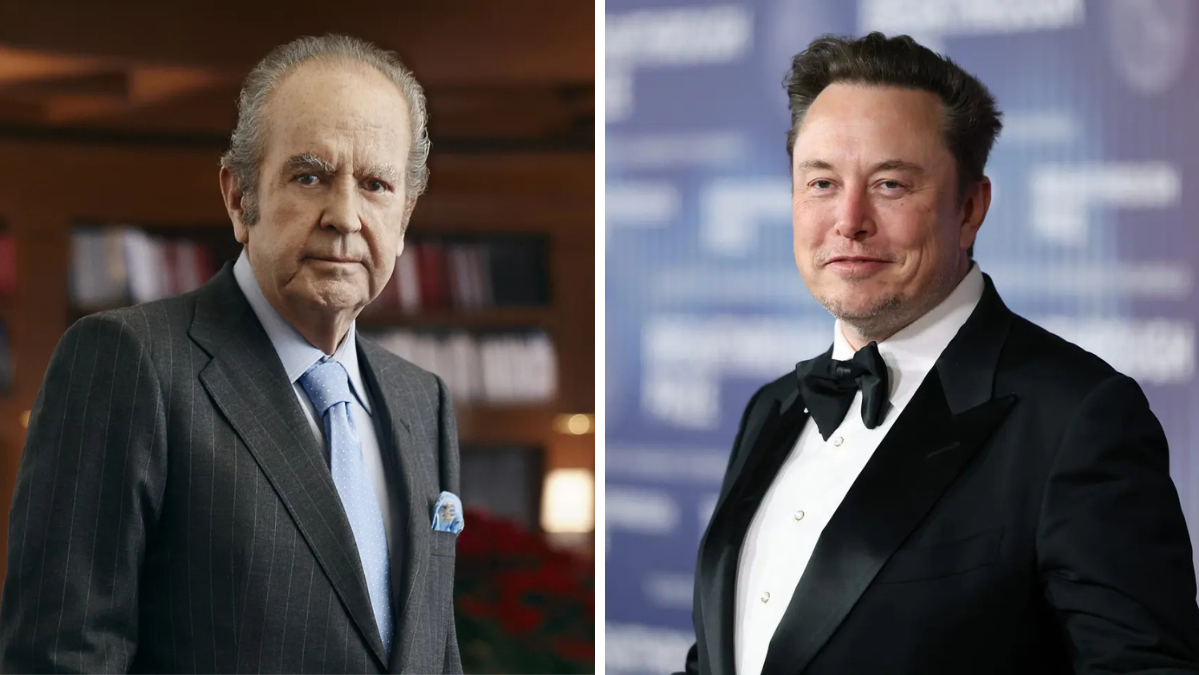
Alberto Bailleres and Elon Musk: Wealth, Business Empires, and Different Paths to Success
Alberto Bailleres and Elon Musk represent two very different approaches to building extraordinary wealth. Bailleres was a Mexican billionaire whose fortune came primarily from mining, precious metals, retail, and long-established family business interests. Musk, meanwhile, became one of the world’s most recognizable entrepreneurs through electric vehicles, space exploration, artificial intelligence, and other technology-driven ventures. Although they operated in different eras and business environments, both demonstrate how strategic decisions, access to capital, and the ability to identify valuable opportunities can shape a business empire.
The connection between Alberto Bailleres and Elon Musk is particularly interesting because their careers highlight contrasting definitions of modern wealth. Bailleres built his reputation through ownership, industrial assets, and the careful development of established enterprises. Musk became famous for pursuing ambitious technological projects that frequently challenged traditional business models. One focused heavily on natural resources and established consumer markets, while the other placed enormous bets on innovation and industries that could transform the future.
Understanding their backgrounds provides a useful perspective on billionaire wealth, business ownership, and economic influence. Their stories also reveal why net worth figures can be misleading when viewed without context. A fortune tied to mining companies and long-term investments behaves differently from wealth heavily dependent on the changing market value of technology shares.
Who Was Alberto Bailleres and Why Was He Important?
Alberto Bailleres González was a prominent Mexican businessman and one of the wealthiest individuals in Latin America. Born in Mexico City in 1931, he became widely known for his leadership of Grupo BAL, a diversified business group with interests in mining, insurance, financial services, and retail. His business activities helped establish him as an influential figure in Mexico’s private sector, particularly through his connection to precious metals and large-scale industrial operations.
Bailleres was closely associated with Industrias Peñoles, one of Mexico’s major mining and metals companies. The business produces and processes precious and base metals, including silver, gold, zinc, and lead. Its operations illustrate how natural resources can generate substantial wealth when supported by technical expertise, industrial infrastructure, international markets, and long-term investment.
His business influence extended beyond mining. Grupo BAL’s portfolio included El Palacio de Hierro, a well-known Mexican department store business, and Grupo Nacional Provincial, an insurance company. These interests gave the group exposure to different economic sectors rather than relying entirely on the performance of one industry.
Bailleres died in February 2022, leaving behind a significant business legacy. His career demonstrated the importance of managing established companies, developing industrial capabilities, and preserving ownership across generations. Rather than becoming famous through a single disruptive invention, he built wealth through a network of businesses serving essential economic needs.
His approach also reflected the particular advantages of operating in resource-rich Mexico. The country’s mining history, industrial workforce, and access to global commodity markets created opportunities for companies capable of operating at scale. Bailleres helped oversee a business structure that connected these opportunities with consumer services and financial products.
Who Is Elon Musk and How Did He Build His Fortune?
Elon Musk is an entrepreneur best known for his leadership and ownership interests in companies operating across technology, transportation, energy, and aerospace. Born in Pretoria, South Africa, in 1971, he later moved to North America and became involved in internet businesses before expanding into electric vehicles and space exploration. His career has been marked by ambitious projects, high-profile public statements, and a willingness to invest heavily in industries with significant technical and financial risks.
Musk first achieved major entrepreneurial success through internet ventures, including Zip2 and X.com. X.com later became part of PayPal, which was acquired by eBay in 2002. The proceeds and experience associated with these businesses helped provide the foundation for his subsequent investments.
His most influential ventures include Tesla, the electric vehicle and clean-energy company, and SpaceX, the aerospace business focused on rockets, spacecraft, and satellite services. Tesla helped bring electric cars into the mainstream market, while SpaceX developed reusable rocket technology and became a major provider of commercial and government space-launch services.
Musk has also been involved in artificial intelligence, social media, and other technology businesses. His interests have included xAI, the company behind the Grok chatbot, and X, the social platform formerly known as Twitter. These ventures demonstrate the breadth of his business ambitions, although each operates under different competitive, financial, and regulatory conditions.
Unlike wealth derived mainly from traditional industrial ownership, much of Musk’s publicly estimated fortune is associated with equity stakes in companies whose valuations can change considerably. Tesla’s share price, private-company valuations, financing arrangements, and other business developments can all affect estimates of his net worth.
This distinction is important when comparing him with Bailleres. Musk’s fortune is closely watched because it can move dramatically with technology-market sentiment. Bailleres’ wealth, by contrast, was associated with a more diversified collection of established businesses and industrial holdings.
Alberto Bailleres and Elon Musk: Comparing Their Business Empires
The comparison between Alberto Bailleres and Elon Musk is not simply a contest over who accumulated more wealth. Their businesses developed within different industries, economic environments, and ownership structures. Examining those differences reveals how multiple strategies can lead to enormous financial success.
Bailleres built his business empire around mining, metals, insurance, and premium retail. These sectors depend on long-term assets, operational efficiency, commodity prices, consumer spending, and financial management. Mining businesses, for example, require substantial capital for exploration, equipment, transportation, processing, environmental compliance, and workforce development.
Musk’s businesses generally rely more heavily on technological development, engineering, intellectual property, and the ability to scale new products. Tesla’s automotive operations require factories and supply chains, while SpaceX depends on advanced engineering, launch infrastructure, and continuous technical development. Although these companies also require substantial physical assets, their market valuations often reflect expectations about future growth as much as current operating performance.
The following table summarizes the main differences between their careers and business interests.
| Category | Alberto Bailleres | Elon Musk |
|---|---|---|
| National background | Mexican businessman | South African-born entrepreneur who became a major US business figure |
| Main wealth sources | Mining, metals, retail, insurance, and diversified investments | Technology, electric vehicles, aerospace, and other equity holdings |
| Major business association | Grupo BAL and Industrias Peñoles | Tesla, SpaceX, and other technology ventures |
| Primary industries | Natural resources, consumer retail, financial services | Technology, transportation, aerospace, artificial intelligence |
| Business approach | Diversified ownership and long-term industrial management | Technology-led expansion and ambitious investment |
| Public profile | Prominent industrialist and investor | Highly visible entrepreneur and public figure |
| Wealth valuation | Closely connected to business ownership and asset values | Strongly influenced by company equity valuations |
| Legacy | Mexican industry, mining, and family business ownership | Electric vehicles, reusable rockets, and technology ventures |
The table shows why the two men should be evaluated through more than a single financial figure. Their wealth emerged from different economic foundations, and each model carries its own opportunities and risks.
Bailleres’ approach illustrates the value of diversification across industries with different revenue drivers. Musk’s approach demonstrates how technological breakthroughs and expectations of future expansion can produce extraordinary valuations, even when businesses require significant investment and face uncertain outcomes.
How Alberto Bailleres Built Wealth Through Mining and Diversification
Mining has played a central role in Mexico’s economic history, and Bailleres’ business interests placed him within one of the country’s most important industrial sectors. Precious metals have commercial value because they serve multiple purposes, including jewellery production, investment, electronics, and industrial manufacturing. Their prices can fluctuate significantly, but established mining companies may benefit from valuable reserves, processing capabilities, and access to international markets.
Industrias Peñoles became an important part of the business structure associated with Bailleres. Its activities demonstrate the complexity of turning underground mineral deposits into profitable commercial products. Companies must identify deposits, obtain permits, develop mines, extract ore, process materials, and transport finished products to customers. Each stage requires expertise, investment, and effective risk management.
Mining profitability depends on several variables. Commodity prices influence revenue, while energy expenses, labour costs, equipment maintenance, exchange rates, and regulatory requirements affect operating margins. A company that manages these factors effectively may remain competitive during difficult market conditions, although no mining operation is protected entirely from market downturns.
Bailleres’ wider business interests also reduced reliance on mining alone. Insurance businesses can generate income from premiums and investments, while department stores earn revenue from consumer purchases. These activities respond to different economic forces, giving a diversified group more than one potential source of earnings.
This model is especially relevant to understanding long-term wealth creation. Rather than depending on a single successful product, a diversified business owner can develop a collection of assets that generate income across several markets. The strategy still involves risks, but it can help balance the impact of changing conditions in any one sector.
His career also highlighted the role of ownership in wealth accumulation. Entrepreneurs and business leaders may receive salaries, but the greatest portion of their fortunes often comes from owning valuable shares in profitable companies. As those companies expand, their ownership stakes may increase in value, creating wealth that can extend beyond the income earned during any particular year.
How Elon Musk Built Wealth Through Technology and Innovation
Musk’s financial success is closely associated with businesses that aim to change established industries. Tesla helped popularize electric vehicles in markets where petrol-powered cars had long dominated. By combining battery technology, software, charging infrastructure, and vehicle design, the company developed a business model that differed from traditional automotive manufacturing.
SpaceX pursued another technically demanding market. Launching rockets has historically been expensive, partly because many components were discarded after a mission. SpaceX invested in reusable rocket systems designed to lower launch costs and increase operational frequency. The company also developed satellite communications through Starlink, creating another business opportunity connected to its aerospace infrastructure.
These projects required large amounts of capital and years of development. New technologies do not automatically produce commercial success, and both automotive manufacturing and aerospace involve substantial engineering, safety, and regulatory challenges. Musk’s businesses have faced production difficulties, competitive pressure, changing market conditions, and public scrutiny.
Nevertheless, investors have often assigned substantial valuations to companies associated with his leadership. Their expectations may reflect projected sales, potential new markets, technological advantages, and anticipated future profits. When investors believe a business can expand dramatically, its market value may rise well beyond the value suggested by its current earnings alone.
This is one reason Musk’s wealth attracts so much attention. A significant proportion of his financial position is tied to ownership stakes rather than cash sitting in a bank account. If a company’s valuation increases, his estimated wealth may rise without him receiving an equivalent amount of spendable money. If the valuation falls, the opposite can happen.
His business strategy therefore illustrates both the possibilities and the volatility of innovation-driven wealth. Technology can create markets that previously seemed impossible, but it can also expose investors and founders to substantial uncertainty.
Net Worth Comparison and Why Billionaire Rankings Change
Comparing the fortunes of Alberto Bailleres and Elon Musk requires care because their wealth is measured differently and belongs to different points in time. Bailleres died in 2022, so current estimates of his estate or family holdings should not automatically be treated as a direct measure of his personal net worth at that date. Estate arrangements, share ownership, taxes, and changes in asset values can all affect the figures associated with an inheritance.
Musk, by comparison, remains associated with actively traded and privately valued businesses. His estimated net worth can change rapidly when Tesla shares move or when analysts revise the valuations of his private companies. These changes can produce major shifts in billionaire rankings without necessarily changing the underlying businesses overnight.
A billionaire’s net worth generally represents the estimated value of assets minus liabilities. For company founders, a large ownership stake may account for much of the total. Other assets may include property, investments, and business interests, while liabilities may include loans or other financial obligations.
Public rankings from organisations such as Forbes and Bloomberg use their own methodologies, available disclosures, and valuation assumptions. Their estimates may differ because private-company shares are harder to value than publicly traded stocks, and because ownership structures are not always completely transparent.
It is therefore more useful to understand the sources of wealth than to rely on an isolated headline figure. Bailleres’ business legacy is associated with diversified industrial ownership, whereas Musk’s fortune is particularly sensitive to the valuation of technology-oriented companies.
For an accurate comparison, any numerical estimate should specify its source and date. Without those details, claims that one man was worth a particular amount more than the other can create a misleading impression of precision.
Leadership Styles and Business Philosophies
Bailleres and Musk also represent contrasting leadership styles. Bailleres was associated with the management of established companies and the development of a diversified business group. This type of leadership requires oversight of complex operations, careful investment decisions, corporate governance, and relationships with employees, regulators, customers, and investors.
Industrial businesses often measure progress over long periods. Developing a mine or expanding a retail network can require years of investment before the full financial benefits appear. Leaders must balance growth with operational discipline and ensure that individual companies remain competitive in their respective markets.
Musk is more closely associated with an engineering-focused, high-risk approach to entrepreneurship. His public reputation centres on ambitious targets, rapid development, and attempts to accelerate change in industries such as transport and aerospace. His businesses frequently set goals intended to push technical capabilities and manufacturing efficiency.
That approach can attract talented engineers and investors who are motivated by difficult problems. However, ambitious deadlines and rapid expansion can also create execution challenges, and bold public targets do not always translate into immediate results.
Neither approach is universally superior. Established industrial ownership can generate dependable value when assets are managed well, but it can be exposed to commodity cycles and slow-moving markets. Innovation-led companies can achieve extraordinary growth, but they may face intense competition, technological uncertainty, and large swings in investor confidence.
The broader lesson is that leadership must match the needs of the business. A mining group requires expertise in resource management, safety, finance, and industrial operations. A technology company developing electric vehicles or rockets needs engineering leadership, product development, manufacturing discipline, and the ability to finance uncertain projects.
Their Influence on Mexico, the United States, and the Global Economy
Bailleres’ business interests contributed to Mexico’s industrial and commercial landscape. Mining companies support employment, supplier networks, infrastructure development, exports, and government revenue. Their operations also connect local economies to international commodity markets, where metals are bought and sold for manufacturing, investment, and industrial use.
The economic impact of mining extends beyond the companies themselves. Mines need transport services, machinery, electricity, construction, specialist contractors, and other supplies. Their activity can support businesses throughout a region, although the benefits depend on local employment, procurement practices, taxation, and the management of environmental and community impacts.
Bailleres’ involvement in insurance and retail added further dimensions to his influence. Insurance companies help individuals and businesses manage financial risks, while department stores connect suppliers, workers, and consumers. Together, these businesses illustrate how a diversified corporate group can participate in several parts of an economy.
Musk’s global influence is particularly visible in electric mobility, commercial spaceflight, and satellite internet. Tesla helped increase competition in electric vehicles and encouraged established automakers to invest more heavily in battery-powered models. SpaceX has altered the commercial launch market and expanded the use of reusable rockets. Starlink has sought to provide internet connectivity in areas where conventional infrastructure can be difficult or expensive to deploy.
These changes have implications beyond individual company profits. Electric vehicles affect automotive supply chains and demand for batteries and minerals. Space launch services influence satellite deployment and government space programmes. Satellite internet can expand connectivity, although affordability, coverage, licensing, and technical limitations remain important considerations.
Both business careers therefore demonstrate that private enterprise can influence wider economic systems. Their impact, however, should be assessed alongside the responsibilities that accompany large-scale commercial activity, including worker safety, environmental protection, competition, privacy, and public accountability.
What Their Stories Teach About Building Lasting Wealth
The careers of Bailleres and Musk offer several useful lessons for entrepreneurs and investors. One is that ownership matters. Building a company can create income, but retaining a meaningful stake in a successful business may be the factor that generates substantial long-term wealth.
Another lesson is the importance of understanding an industry’s economics. Mining depends on reserves, production costs, commodity prices, and infrastructure. Electric vehicles depend on manufacturing efficiency, battery costs, consumer demand, and competition. Different sectors require different skills, but success in each depends on understanding how value is created and protected.
Diversification is another important consideration. Bailleres’ interests across several sectors demonstrate how business ownership can be spread among different sources of revenue. Diversification does not eliminate risk, especially when companies share economic exposures or ownership structures, but it can reduce dependence on a single business.
Musk’s career highlights the potential rewards of taking calculated risks. Investing in new technology can produce major gains when a product achieves widespread adoption or a company creates an entirely new market. At the same time, concentrated investments can result in significant losses when expectations fail to match commercial reality.
Long-term thinking also matters. Industrial assets often take years to develop, and new technologies can require extensive research, testing, and investment. Business leaders must distinguish between temporary setbacks and deeper problems with a business model.
Finally, wealth should not be confused with cash flow or financial security. A person may hold valuable shares while having limited liquid funds relative to their overall net worth. Market prices can change, and selling substantial holdings may have tax consequences or affect control of a company. Understanding the difference between assets, income, and liquidity is essential when evaluating any billionaire’s financial position.
Quotes and Perspectives on Business Success
A useful way to understand these business careers is to consider the different challenges faced by industrial owners and technology entrepreneurs. Bailleres’ legacy reflects the importance of maintaining valuable assets, managing diversified operations, and building companies that can survive changes in leadership. Musk’s career highlights the role of ambitious engineering goals and the willingness to commit resources to uncertain projects.
Rather than attributing an unverified quotation to either businessman, their approaches can be summarised through the following contextual observations.
This principle is especially relevant to diversified industrial groups. Businesses need productive assets, competent management, reliable customers, and the ability to remain competitive through changing market conditions. A high valuation alone does not guarantee that a company can deliver sustainable returns.
This observation applies to technology ventures such as electric vehicle manufacturers and aerospace companies. A promising concept must ultimately become a safe, reliable, commercially viable product or service. Engineering achievements matter, but production costs, customer demand, financing, and regulatory requirements are equally important.
These statements are analytical summaries rather than direct quotations from Bailleres or Musk. They capture two complementary ideas: wealth can grow through the disciplined ownership of productive businesses, and innovation can create new sources of value when ambitious ideas are translated into successful operations.
The Lasting Legacy of Alberto Bailleres and Elon Musk
Bailleres’ legacy is rooted in Mexico’s industrial development and the continued importance of mining, metals, insurance, and retail. His career demonstrates that substantial wealth can be built through established industries when businesses are managed with a long-term perspective and supported by valuable assets.
Musk’s legacy is still developing. His companies have already influenced electric vehicles, reusable rockets, and satellite communications, but their ultimate impact will depend on future commercial performance, technological progress, competition, and regulatory decisions. His career shows how ambitious investment can reshape established industries while exposing businesses to substantial financial and operational risks.
The comparison between the two men also challenges the idea that there is only one route to becoming wealthy. One business model emphasises diversification, established operations, and long-term industrial ownership. The other emphasises technological development, rapid expansion, and the possibility of creating entirely new markets.
Both models depend on more than a famous name or a large fortune. They require capital, skilled employees, effective management, strategic decisions, and the ability to respond when circumstances change. Their experiences also show why the most meaningful measure of business success includes not just the size of an individual’s fortune, but the durability and broader effects of the companies behind it.
Frequently Asked Questions About Alberto Bailleres and Elon Musk
What was the main difference between Alberto Bailleres and Elon Musk?
The main difference was the source of their wealth and the industries in which they operated. Bailleres built his fortune through mining, metals, insurance, retail, and diversified business ownership in Mexico. Musk accumulated wealth primarily through technology-related investments and companies associated with electric vehicles, aerospace, and artificial intelligence. Their careers demonstrate two different approaches to business growth and long-term wealth creation.
Was Alberto Bailleres richer than Elon Musk?
Their fortunes cannot be compared accurately without specifying the dates and valuation methods used. Bailleres’ wealth was linked to his business holdings and investments, while Musk’s estimated net worth has been strongly influenced by changes in company valuations and share prices. Since Bailleres died in 2022, current estimates of his family’s assets should not be confused with his personal net worth during his lifetime.
What companies were associated with Alberto Bailleres?
Bailleres was closely associated with Grupo BAL, a diversified Mexican business group. Its interests included Industrias Peñoles, a major mining and metals company, El Palacio de Hierro, a department store business, and Grupo Nacional Provincial, an insurance company. These businesses helped establish his reputation as an influential figure in Mexico’s private sector.
Which companies made Elon Musk famous?
Musk became widely known through Tesla and SpaceX. Tesla is associated with electric vehicles, battery technology, and clean-energy products, while SpaceX develops rockets, spacecraft, and satellite services. His other business interests have included X and xAI. The financial performance and market valuations of these companies have played an important role in shaping his estimated wealth.
What can investors learn from Alberto Bailleres and Elon Musk?
Investors can learn that wealth can develop through different business strategies. Bailleres’ career highlights diversification, industrial ownership, and long-term asset management. Musk’s experience illustrates the potential rewards and risks of investing in emerging technologies. Both examples underline the importance of understanding business fundamentals, evaluating risk, and distinguishing between estimated net worth and readily available cash.
Why is the comparison between Alberto Bailleres and Elon Musk interesting?
The comparison highlights how business leaders can create wealth in very different economic environments. Bailleres built a diversified industrial empire rooted in Mexico’s resource and consumer markets, whereas Musk pursued technology-led businesses with international reach. Their experiences offer contrasting perspectives on entrepreneurship, capital allocation, innovation, and the changing nature of billionaire wealth.
How did Alberto Bailleres influence the Mexican economy?
Bailleres influenced the Mexican economy through businesses involved in mining, precious metals, retail, and insurance. These sectors support employment, industrial supply chains, consumer activity, and connections with international markets. His business interests also demonstrate how diversified corporate groups can contribute to multiple areas of a national economy.
Why does Elon Musk’s net worth change so frequently?
Musk’s estimated wealth is heavily connected to the value of his ownership stakes in companies, particularly businesses whose valuations can change considerably. Movements in publicly traded shares, private-company valuation estimates, financing arrangements, and other financial developments can all affect reported figures. Consequently, billionaire rankings should be understood as estimates rather than fixed measures of personal wealth.
Conclusion: Two Different Paths to Extraordinary Wealth
The stories of Alberto Bailleres and Elon Musk show that extraordinary wealth can emerge from very different business philosophies. Bailleres established his legacy through diversified industrial ownership, mining, metals, insurance, and retail, while Musk became a leading figure in technology, electric vehicles, aerospace, and other developing industries.
Their experiences demonstrate that successful business ownership requires strategic thinking, investment, strong management, and an understanding of the markets in which companies operate. They also highlight the importance of looking beyond net worth rankings to examine how fortunes are created, how businesses generate value, and how leadership decisions affect industries and communities.
Ultimately, Alberto Bailleres and Elon Musk represent two distinct models of economic influence. One reflects the enduring value of established industrial enterprises, while the other illustrates the transformative possibilities of technological innovation. Both provide valuable perspectives on entrepreneurship, investment, and the many ways business leaders can shape the global economy
Read aslo Rob Reiner Net Worth: Career, Films, Earnings, and Hollywood Legacy