Candace Owens: Career, Personal Life, Political Views, and Media Influence
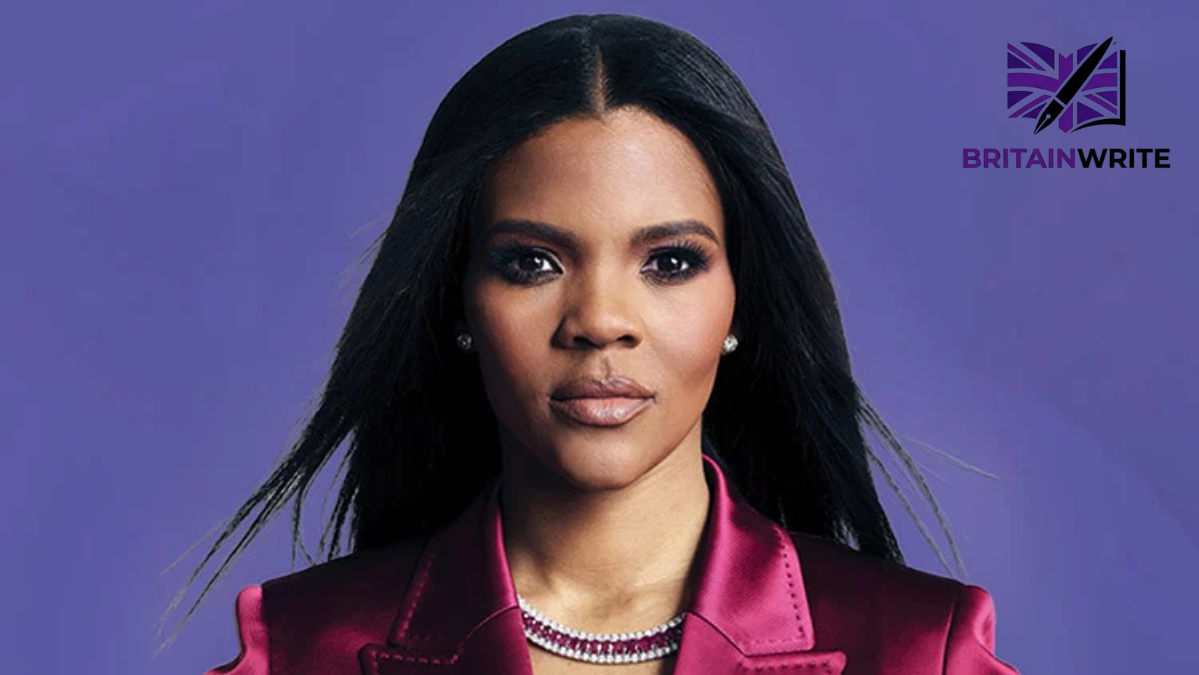
Candace Owens is an American political commentator, author, and media personality known for her outspoken conservative views and willingness to challenge established political narratives. Over the years, she has become a prominent figure in discussions about American politics, free speech, cultural identity, immigration, and the role of the media. Her direct communication style and controversial opinions have attracted millions of followers, while her critics frequently challenge her arguments and public statements.
Her rise to prominence reflects the growing influence of digital media in modern political debate. Rather than relying exclusively on traditional television networks or established newspapers, she has built an audience through social media, interviews, public appearances, podcasts, and independent commentary. This approach has helped her reach people who feel disconnected from mainstream political institutions.
Understanding her career requires looking beyond the headlines. Her professional journey includes early political activism, work with conservative organizations, high-profile media appearances, book publishing, and the development of an independent media presence. Her public life has also been shaped by disagreements with political figures, media organizations, and commentators who once shared similar positions.
Who Is Candace Owens and Why Is She Famous?
Candace Owens is best known for her conservative political commentary and criticism of progressive politics. She frequently discusses American identity, racial politics, family values, education, and government policy. Her approach is often confrontational, and she regularly uses interviews and online broadcasts to challenge people whose opinions differ from hers.
Her fame grew significantly during the late 2010s, when conservative political movements became increasingly influential in American public life. She gained attention for questioning conventional narratives about race and the Democratic Party, arguing that political identity should not determine an individual’s beliefs or choices. These positions resonated with some conservative audiences, particularly those interested in alternative perspectives on American social issues.
At the same time, her statements have generated substantial criticism. Opponents have accused her of oversimplifying complex historical questions, spreading misleading claims, or using provocative rhetoric to attract attention. Supporters often describe her as an independent thinker who is willing to confront powerful institutions.
The contrast between these reactions is central to her public profile. She is not simply a political analyst who explains current events; she is also a personality whose opinions frequently become part of the political story themselves.
Early Life and Educational Background
Candace Owens was born on April 29, 1989, in Stamford, Connecticut. She grew up in the United States and has discussed aspects of her childhood and family background in interviews and public appearances. Her early experiences later became part of the personal narrative she used when discussing race, identity, opportunity, and political independence.
Her background is relevant to understanding how she presents her political views. She has repeatedly challenged the assumption that a person’s racial identity should determine their political affiliation. In her commentary, she argues that individuals should be evaluated according to their ideas rather than being expected to support a particular party because of their background.
Owens attended the University of Rhode Island, where she studied journalism but did not complete her degree. Before becoming widely known as a political commentator, she worked in the private sector, including positions connected with communications and administration.
Her path into politics was not entirely straightforward. She initially explored professional opportunities outside political media before moving toward online commentary and activism. That transition eventually provided the foundation for her public career.
How Candace Owens Began Her Political Career
The early stages of Owens’s career included an online project that attracted attention for reasons unrelated to her later conservative reputation. In 2016, she launched SocialAutopsy.com, a proposed website intended to document online harassment and abusive behaviour. The project generated significant backlash because critics raised concerns about privacy, public shaming, and the potential exposure of personal information.
The controversy became an important moment in her public development. It introduced her to wider online audiences and placed her in the middle of debates about internet culture, accountability, and free expression. Although the project did not become the lasting foundation of her career, the attention helped establish her as a recognisable figure in online political discussions.
Following this period, Owens increasingly aligned herself with conservative political ideas. She began criticising progressive activism and questioning the political assumptions she associated with the American left. Her commentary gradually attracted an audience interested in arguments that challenged conventional partisan expectations.
Her political transformation became a defining part of her personal brand. She often presents her journey as an example of changing one’s mind after reconsidering previously accepted ideas. Critics, however, have questioned aspects of her political messaging and the way she characterises opposing viewpoints.
Turning Point USA and Her Rise to National Attention
One of the most important developments in Owens’s career was her association with Turning Point USA, a conservative advocacy organisation focused on young people and college campuses. The organisation promotes free-market economics, limited government, and conservative political principles.
Owens became its communications director in 2017 and later served as a prominent public representative. Her role gave her access to conservative events, political audiences, interviews, and national media coverage. She also became associated with the Blexit movement, a campaign that encouraged Black Americans to reconsider their traditional relationship with the Democratic Party.
The term Blexit combines the words Black and exit. The movement was presented as a call for political independence and a reassessment of party loyalty. Supporters viewed it as an opportunity to challenge longstanding political assumptions, while critics questioned its messaging and its portrayal of Black political identity.
Her association with Turning Point USA helped turn an online commentator into a nationally recognised conservative personality. She appeared at political events and participated in debates about race, identity, and American conservatism.
Owens eventually left the organisation in 2019. Although that chapter ended, the visibility she gained during her time there continued to influence her subsequent work in political media.
Major Career Milestones at a Glance
The following table summarises important developments in her professional journey.
| Year | Career milestone | Significance |
|---|---|---|
| 2016 | Launched SocialAutopsy.com | Brought her early public attention through an online controversy |
| 2017 | Joined Turning Point USA | Expanded her presence in conservative political activism |
| 2018 | Became a prominent Blexit advocate | Increased her visibility in debates about race and political affiliation |
| 2019 | Left Turning Point USA | Marked a transition toward a more independent media career |
| 2020 | Published Blackout | Established her as a published political author |
| 2021 | Published The Truth About Social Justice | Continued her criticism of progressive political ideas |
| 2022 | Launched Candace on The Daily Wire | Expanded into a dedicated political talk show |
| 2024 | Parted ways with The Daily Wire | Opened a new chapter in her independent media career |
These milestones illustrate how her career developed through a combination of political activism, public controversy, publishing, and digital broadcasting. Each stage introduced her to new audiences while increasing the scrutiny surrounding her public statements.
Candace Owens as an Author and Political Commentator
Owens expanded her public profile by publishing books that examine American politics, race, and social identity from a conservative perspective. Her writing generally challenges progressive interpretations of social inequality and argues that political and cultural institutions can discourage independent thinking.
Her 2020 book, Blackout: How Black America Can Make Its Second Escape from the Democrat Plantation, became one of her most recognisable publications. The book presents her argument that Black Americans should reconsider their political allegiance and evaluate policies according to their practical consequences rather than historical party associations.
The book’s title and central argument are deliberately provocative. Supporters appreciate its challenge to conventional political expectations, while critics object to its historical comparisons and characterisation of Democratic Party politics. This disagreement reflects the broader divisions surrounding her public work.
In 2021, she published The Truth About Social Justice, another book focused on contemporary political debates. It examines ideas connected with social justice activism, institutional power, and cultural change from her conservative viewpoint.
Her writing is most useful to readers as an illustration of her political philosophy rather than as a neutral account of American history. Readers seeking a comprehensive understanding of the issues she discusses can compare her arguments with academic research, historical scholarship, and perspectives from across the political spectrum.
The Daily Wire and Her Television Career
A significant stage in her professional development began in 2021, when Owens joined The Daily Wire, a conservative media company founded by Ben Shapiro and Jeremy Boreing. The organisation produces political commentary, news-related content, podcasts, films, and other media aimed largely at conservative audiences.
Owens hosted the programme Candace, where she discussed current events, interviewed guests, and presented opinions on political and cultural developments. The show provided a regular platform for her commentary and helped strengthen her relationship with viewers who preferred conservative alternatives to mainstream television programming.
Her work at The Daily Wire also demonstrated how political media had changed. Personalities could develop loyal audiences through online subscriptions, video platforms, and social media rather than depending exclusively on conventional broadcast networks.
However, the relationship ended in March 2024. The Daily Wire and Owens announced their separation amid a public dispute that included controversy surrounding her comments on Israel and other contentious subjects. The disagreement attracted considerable attention because the organisation and Owens had previously appeared closely aligned on many political issues.
The departure illustrated an important feature of modern political media: shared ideology does not guarantee lasting professional agreement. Personal relationships, editorial standards, public statements, and commercial priorities can all affect whether commentators remain within established media organisations.
Her Independent Media Presence and Podcasting
After leaving The Daily Wire, Owens continued developing her independent media career. Independent broadcasting allows commentators to exercise greater control over their topics, presentation, publishing schedules, and relationship with their audiences.
For political personalities, this approach offers several advantages. Creators can distribute long-form interviews, publish commentary quickly, and speak directly to viewers without relying entirely on a traditional television network. Social media also makes it easier for individual clips to reach audiences who may never watch an entire programme.
Owens’s media presence has included online videos, interviews, podcasts, and commentary distributed through digital platforms. Her style typically combines personal opinions, political criticism, and extended discussions of controversial public issues.
Independent media also presents challenges. Without the editorial structure of a larger organisation, commentators may face greater scrutiny over fact-checking, sourcing, corrections, and the distinction between opinion and verified information. Audiences must therefore consider both the arguments being presented and the quality of the evidence supporting them.
For readers and viewers, her independent work provides a direct view of her evolving political positions. It also makes it important to distinguish between a commentator’s interpretation of events and independently established facts.
Political Views and Conservative Philosophy
Owens is associated with American conservatism and frequently advocates individual responsibility, traditional family structures, limited government, and a more sceptical approach to progressive social policies. Her political commentary often emphasises personal choice and argues against treating demographic identity as the primary basis for political decisions.
One recurring theme is her criticism of identity politics. She argues that political movements can become counterproductive when they define people primarily through race, gender, or other group characteristics. She instead promotes individual agency and the idea that citizens should evaluate political parties on their policies and performance.
Her position on government and economics generally reflects conservative principles, although the specific arguments she makes vary depending on the issue. She has also criticised aspects of contemporary feminism, progressive education policies, and cultural trends she believes undermine traditional institutions.
These views have helped her develop a committed audience among people who share her political outlook. They have also placed her in frequent conflict with liberal commentators, activists, and some members of the conservative movement.
Political analysis benefits from distinguishing between values, policy proposals, and factual claims. Values describe what a person believes society should prioritise. Policy proposals describe actions governments or institutions should take. Factual claims require evidence that can be independently examined. Keeping these categories separate helps readers evaluate controversial commentary more effectively.
Controversies and Public Criticism
Controversy has been a consistent part of Owens’s public career. Her comments about race, historical events, public health, international affairs, and cultural issues have repeatedly generated criticism and extensive online debate.
Some of the criticism concerns her rhetorical style. She often uses forceful language and broad contrasts to communicate political arguments. Supporters see this as directness, while critics believe it can reduce complicated issues to oversimplified conclusions.
Other disputes concern the accuracy and interpretation of specific statements. In these situations, it is important to examine the original remarks, the surrounding context, and credible evidence rather than relying exclusively on short clips or social media summaries.
Her comments about Adolf Hitler and nationalism also attracted attention in 2019. During a Turning Point USA event, she discussed Hitler in the context of nationalism and expansionism. Her remarks were widely criticised, and she subsequently clarified that her point concerned Hitler’s pursuit of territorial expansion rather than an endorsement of his ideology. The episode became an example of how controversial wording can overshadow a speaker’s intended argument.
Another major controversy developed in 2024 around her statements concerning Israel and Jewish people. The dispute contributed to her departure from The Daily Wire. The episode generated broader discussions about antisemitism, criticism of the Israeli government, and the responsibilities of public commentators when discussing sensitive historical and political subjects.
These incidents demonstrate why context matters. A responsible assessment should consider what was said, what evidence supports the claim, how the speaker responded to criticism, and whether independent reporting confirms the interpretation being circulated.
Candace Owens and the Role of Social Media
Social media has been central to Owens’s growth and continuing influence. Platforms such as YouTube, Instagram, and X allow political commentators to communicate directly with audiences, distribute video clips, and respond rapidly to current events.
This environment rewards content that captures attention. Strong opinions, disagreement, and emotionally charged subjects often generate more engagement than cautious or technical explanations. Owens’s outspoken approach fits this media environment, helping her commentary travel beyond the audiences that follow her directly.
Online distribution also changes how political debates unfold. A long interview may contain detailed arguments, but the most widely shared clip might be only a few seconds long. That clip can shape public opinion without conveying the full discussion.
For this reason, readers should look for original recordings, complete transcripts, and reliable reporting when evaluating controversial claims. A short video may accurately represent a statement while leaving out important context, or it may be presented in a misleading way.
Social media gives Owens an opportunity to challenge established narratives, but the same platforms also expose her to immediate criticism and fact-checking. Her career illustrates both the power and the limitations of digital political communication.
Personal Life, Husband, and Family
Outside her professional activities, Owens has a family life that she generally keeps separate from some aspects of her political work. She married British businessman George Farmer in 2019. Farmer has been associated with conservative political circles and business activities, including leadership roles connected with social media and technology companies.
Their relationship has attracted public interest because both have connections to conservative politics. However, their professional backgrounds and personal lives should not be treated as interchangeable. Publicly documented political associations do not establish what a couple privately believes or how they manage their relationship.
Owens and Farmer have children together. She has occasionally discussed motherhood, parenting, and family values in public commentary, often connecting these subjects to her views on social policy and cultural change.
Although public figures inevitably attract curiosity about their private lives, reliable reporting should distinguish confirmed information from speculation. Details about children and other family members deserve particular care, especially when they do not contribute meaningfully to understanding a person’s public career.
Her family life is one part of her broader biography, but her professional identity remains primarily associated with political commentary, publishing, and digital media.
How Her Public Influence Is Measured
Measuring the influence of a political commentator involves more than counting followers. Audience size, media appearances, book sales, public speaking engagements, online engagement, and the ability to influence political conversations all provide useful indicators.
Owens has achieved national recognition through her work with conservative organisations, her publishing career, and her independent media activity. Her statements regularly attract responses from political opponents, journalists, activists, and fellow conservatives. That attention demonstrates her visibility, although it does not necessarily establish that her arguments persuade people or change policy.
Her influence also depends on the political environment. During election campaigns, public controversies, or debates about cultural identity, audiences may become especially interested in commentators who offer strong opinions. The same personality may receive less attention when the public conversation shifts to other issues.
It is also important to distinguish popularity from credibility. A commentator can have a large audience without being correct about every subject, just as a controversial opinion is not automatically false because it attracts criticism. Each claim should be assessed according to its evidence, reasoning, and context.
For anyone studying American political communication, Owens provides a useful example of how personal branding, ideological identity, and digital distribution can combine to create a highly visible media career.
Comparing Traditional and Independent Political Media
Owens’s career reflects a wider shift in the way audiences consume political information. Traditional media organisations generally operate with established editorial structures, while independent commentators often have greater freedom over how they select and present subjects.
Neither model guarantees accuracy. Traditional outlets can make mistakes or reflect institutional biases, while independent creators can publish useful original analysis or circulate poorly supported claims. The important distinction is not simply who owns the platform but how the information is researched, presented, and corrected.
| Feature | Traditional political media | Independent political media |
|---|---|---|
| Editorial structure | Usually has formal editorial processes | Varies considerably by creator |
| Content control | Shared among reporters, editors, and management | Often concentrated with the creator |
| Audience relationship | Frequently mediated by the organisation | Often more direct and personal |
| Publishing speed | May involve several approval stages | Can respond quickly to developing events |
| Accountability | May include corrections and formal complaints procedures | Depends on the creator and platform |
| Revenue sources | Advertising, subscriptions, licensing, or ownership funding | Subscriptions, advertising, sponsorships, and merchandise |
This comparison helps explain why independent commentators have become important in contemporary political debates. They can reach audiences quickly and create a distinctive identity, but they must also demonstrate that their reporting and analysis deserve public trust.
Why Candace Owens Remains a Widely Discussed Figure
Owens remains a subject of public discussion because her career touches on several highly contested questions in American society. These include the relationship between race and political identity, the boundaries of free speech, the role of traditional values, and the responsibilities of influential commentators.
Her supporters value her willingness to challenge progressive assumptions and speak confidently about subjects they believe are neglected by mainstream media. They may also appreciate her emphasis on individual responsibility and political independence.
Her critics focus on statements they consider misleading, inflammatory, or insufficiently supported by evidence. Some argue that her rhetorical approach encourages polarisation, particularly when complicated historical and political issues are reduced to sharp ideological contrasts.
Both reactions help explain her continuing visibility. In a fragmented media environment, personalities often become influential not because everyone agrees with them but because their views provoke sustained discussion.
Her career also demonstrates that political identities can evolve. Professional alliances change, public positions develop, and controversies can reshape a commentator’s relationship with former colleagues. Following these changes over time provides a more accurate picture than judging an entire career through a single interview or headline.
Frequently Asked Questions About Candace Owens
Who is Candace Owens?
Candace Owens is an American conservative political commentator, author, and media personality. She became nationally recognised through her association with Turning Point USA, her books on race and politics, and her work in digital broadcasting. Her outspoken views have made her both influential among conservative audiences and controversial among political opponents.
How old is Candace Owens?
She was born on April 29, 1989. Based on that birth date, she is 37 years old as of October 2026. Her career began before she became a nationally recognised political commentator, with early professional experience and online projects preceding her rise in conservative media.
Who is Candace Owens married to?
She is married to George Farmer, a British businessman associated with conservative political circles. The couple married in 2019 and have children together. Their shared connections to conservative politics have contributed to public interest in their relationship.
What made Candace Owens famous?
Her national profile grew through conservative activism, particularly her work with Turning Point USA and her advocacy for Blexit. She later expanded her audience through political books, television-style commentary, online videos, and podcasting. Her direct communication style and controversial statements have contributed to her visibility.
What books has Candace Owens written?
Her best-known books include Blackout: How Black America Can Make Its Second Escape from the Democrat Plantation, published in 2020, and The Truth About Social Justice, published in 2021. Both works present conservative arguments about political identity, social policy, and contemporary American culture.
Why did Candace Owens leave The Daily Wire?
Owens and The Daily Wire announced their separation in March 2024 following a public dispute involving her comments on Israel and other contentious issues. The departure ended her tenure hosting Candace and marked a transition toward a more independent media presence.
What are Candace Owens’s political beliefs?
She is generally associated with American conservatism and advocates individual responsibility, traditional family values, and criticism of progressive social policies. She also challenges identity-based political expectations and encourages voters to assess political parties according to their policies. Her specific positions should be evaluated individually rather than assuming that every conservative viewpoint applies to her.
Is Candace Owens controversial?
Yes. Her statements about race, historical events, public health, Israel, and other political subjects have generated significant debate. Supporters often praise her willingness to challenge established narratives, while critics question the accuracy, context, or implications of some of her claims. Examining original statements and reliable evidence is essential to understanding these disputes.
Conclusion
Candace Owens has developed a distinctive career at the intersection of conservative politics, publishing, and independent digital media. From her early online projects to her work with Turning Point USA, her books, and her television-style commentary, her professional journey reflects the growing importance of individual personalities in modern political communication.
Her influence comes from her ability to attract attention, articulate strong opinions, and encourage debate about issues that divide American society. At the same time, the controversies surrounding her statements demonstrate the importance of accuracy, context, and responsible public discussion.
For readers seeking to understand her career, the most useful approach is to examine her published work, complete interviews, public statements, and the evidence behind her arguments. Looking at both her supporters’ perspectives and her critics’ concerns provides a fuller understanding of her place in contemporary political media.
Ultimately, her public profile illustrates a broader reality about modern commentary: visibility and controversy can create influence, but lasting credibility depends on the quality of the arguments, the reliability of the evidence, and a willingness to engage seriously with competing perspectives.
Read also Reese Witherspoon and Audrey Hepburn: Timeless Style, Talent, and Hollywood Influence