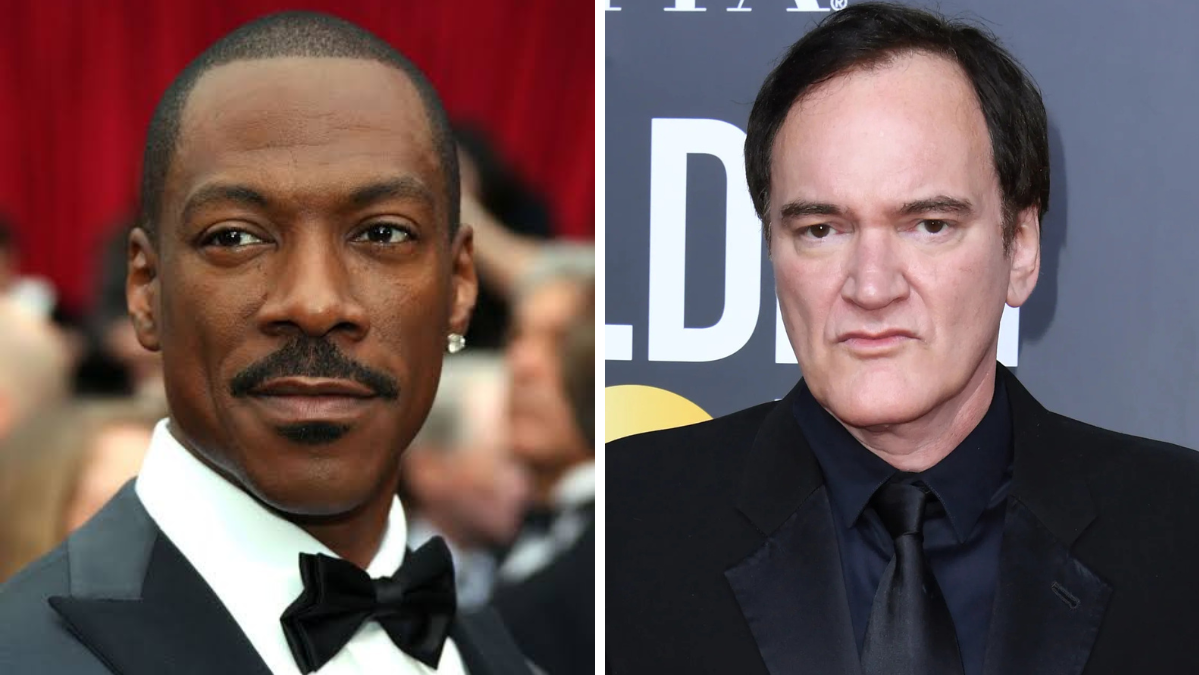
Eddie Murphy and Quentin Tarantino: Careers, Movies, and Hollywood Connections
Eddie Murphy and Quentin Tarantino are two of the most recognizable names in American entertainment, yet they have built their reputations through very different approaches to filmmaking. Murphy became a household name through stand-up comedy, television, and blockbuster movies, while Tarantino earned international acclaim for his distinctive directing style, sharp dialogue, unconventional storytelling, and bold cinematic influences. Both have helped shape modern Hollywood, but their paths to success reveal contrasting ideas about comedy, violence, performance, and the art of entertaining an audience.
Interest in Eddie Murphy and Quentin Tarantino often comes from the natural curiosity surrounding two influential figures whose careers have overlapped with several generations of moviegoers. Murphy is celebrated for characters that combine humor, confidence, physical comedy, and emotional warmth. Tarantino is known for films that frequently blend crime, dark humor, intense conversations, memorable soundtracks, and sudden bursts of violence. Their work demonstrates how different creative personalities can leave equally significant marks on popular culture.
Although their professional identities are distinct, both entertainers understand the importance of a memorable voice. Murphy can transform an ordinary conversation into a comedy routine through timing, facial expressions, and personality. Tarantino can turn an extended conversation into a suspenseful cinematic moment through rhythm, subtext, and carefully chosen words. Their shared commitment to distinctive entertainment helps explain why audiences continue to discuss their careers, filmographies, and possible creative connections.
Understanding their individual achievements also provides a clearer picture of their place in Hollywood. Rather than treating them as a conventional director-actor partnership, it is more useful to examine their careers separately, compare their storytelling methods, and distinguish documented professional connections from speculation. This approach reveals why both remain important names in discussions about American cinema.
Who Is Eddie Murphy?
Eddie Murphy is an American actor, comedian, producer, and entertainer who rose to prominence during the early 1980s. Born on April 3, 1961, in Brooklyn, New York, he developed an interest in comedy at a young age. His talent for impressions, character work, and observational humor helped him stand out before he became one of the most commercially successful comedy performers of his generation.
Murphy first achieved widespread recognition as a cast member on Saturday Night Live. Joining the program in 1980, he quickly became one of its defining performers. His characters, impressions, and energetic delivery helped strengthen the show’s popularity during a challenging period. His success on television created opportunities in feature films, where his personality translated naturally to the big screen.
His early film career included major hits such as 48 Hrs., Trading Places, and Beverly Hills Cop. These movies established Murphy as a leading Hollywood star who could combine comedy with action, crime, and adventure. His performance as Axel Foley in Beverly Hills Cop became particularly influential, helping create a model for the charismatic, wisecracking action-comedy hero.
Murphy later expanded his range through family entertainment, voice acting, dramatic performances, and musical projects. His portrayal of multiple characters in Coming to America demonstrated his ability to create distinct personalities within the same film. As the voice of Donkey in the Shrek franchise, he introduced his comic timing to younger audiences around the world. These achievements made his career far more varied than a simple focus on stand-up comedy might suggest.
Who Is Quentin Tarantino?
Quentin Tarantino is an American filmmaker, screenwriter, producer, and occasional actor known for a highly recognizable approach to storytelling. Born on March 27, 1963, in Knoxville, Tennessee, he developed a passion for movies through years of watching films and studying cinematic conventions. Before achieving fame as a director, he worked in a video rental store, where he explored movies from different eras, countries, and genres.
Tarantino emerged as a major independent filmmaker with Reservoir Dogs, released in 1992. The crime film attracted attention for its nonlinear structure, tense dialogue, carefully developed characters, and unconventional treatment of violence. Its success established him as a filmmaker willing to challenge familiar storytelling formulas while drawing inspiration from crime cinema, exploitation movies, and classic Hollywood techniques.
His international breakthrough came with Pulp Fiction in 1994. The film combined intersecting storylines, dark comedy, crime, philosophical conversations, and an eclectic soundtrack. It won the Palme d’Or at the Cannes Film Festival and earned Tarantino and Roger Avary the Academy Award for Best Original Screenplay. Its influence extended beyond awards, shaping conversations about independent filmmaking and nonlinear narratives.
Tarantino continued developing his signature style through films including Jackie Brown, Kill Bill: Vol. 1, Kill Bill: Vol. 2, Inglourious Basterds, Django Unchained, and Once Upon a Time in Hollywood. His movies frequently revisit and transform established genres, including martial arts cinema, westerns, war films, and crime thrillers. This combination of film history, stylized dialogue, and distinctive character development has made him one of the most recognizable directors of his generation.
Eddie Murphy and Quentin Tarantino: Are They Connected Professionally?
The subject of Eddie Murphy and Quentin Tarantino invites comparisons because both have played important roles in American entertainment since the 1980s and 1990s. However, their reputations largely come from different professional traditions. Murphy is primarily associated with comedy, mainstream stardom, and performances built around personality, while Tarantino is best known for writing and directing films that reinterpret established cinematic genres.
It is important to distinguish a shared place in Hollywood history from a confirmed creative collaboration. There is no widely established, major film collaboration between Murphy and Tarantino that defines either man’s career. Their names can be discussed together as influential entertainers, but that does not establish that one directed the other or that they jointly developed a movie.
Their separate filmographies also help explain why audiences might imagine an interesting partnership. Murphy has demonstrated that he can handle crime stories, action sequences, and dramatic material in addition to comedy. Tarantino has repeatedly shown that his films can accommodate eccentric humor, charismatic performances, and dialogue-driven scenes. Those overlapping capabilities create room for hypothetical comparisons without proving that a particular project has been planned.
The distinction matters for readers researching Hollywood collaborations. A genuine professional connection should be supported by reliable production credits, interviews, studio announcements, or other verifiable records. Until a collaboration is documented, the more accurate discussion centers on their individual achievements and the artistic similarities that make comparisons interesting.
Comparing Their Most Influential Films
Murphy and Tarantino have both produced work that audiences continue to revisit, although their most famous films serve different purposes. Murphy’s best-known movies often build around an immediately engaging central character, clear comedic stakes, and a narrative designed to entertain a broad audience. Tarantino’s films frequently place greater emphasis on structure, genre references, extended conversations, and morally complicated characters.
Murphy’s Beverly Hills Cop offers an excellent example of his strengths. Axel Foley is a confident, quick-thinking Detroit detective whose personality creates comic tension when he encounters the more formal environment of Beverly Hills. The film balances police action with jokes and improvisational energy, making Murphy’s performance central to its appeal.
Tarantino’s Pulp Fiction offers a contrasting approach. Rather than following a straightforward crime narrative, it rearranges events and shifts attention among several characters. Conversations that initially seem ordinary gradually reveal hidden motives or develop into suspenseful encounters. The result encourages viewers to pay attention not only to what happens but also to how information is presented.
Both filmmakers have also benefited from strong supporting casts. Murphy’s movies often feature performers who respond to his energy and help create memorable comedic contrasts. Tarantino’s films use ensemble performances to build layered worlds in which even brief appearances can leave a lasting impression. In both cases, casting contributes significantly to the films’ identities.
Their most successful projects demonstrate that commercial entertainment and artistic individuality do not have to be opposing goals. Murphy made mainstream comedy feel personal through distinctive characters, while Tarantino brought unconventional narrative choices into films that reached substantial audiences. Their legacies show that originality can take different forms depending on the creator’s strengths and ambitions.
Their Different Approaches to Comedy and Dialogue
Comedy is central to Murphy’s reputation, but his humor is not limited to telling jokes. His performances often depend on physical expression, vocal changes, confident delivery, and the ability to make a character’s personality funny even when the dialogue is relatively simple. His stand-up work, particularly Delirious and Raw, also demonstrates his command of rhythm, storytelling, and audience interaction.
Tarantino approaches comedy differently. His humor often emerges from tension, absurdity, awkward social situations, or the contrast between casual conversation and dangerous circumstances. Characters may discuss food, music, or everyday frustrations while the audience becomes increasingly aware that something serious is unfolding. This contrast creates a distinctive form of dark comedy.
Dialogue connects their styles in an interesting way. Murphy frequently uses dialogue to establish charm, expose hypocrisy, or turn a character’s confidence into a source of laughter. Tarantino uses dialogue to reveal character, build anticipation, establish power relationships, and occasionally deliver humor that feels unexpected or unsettling.
Their respective strengths show why dialogue cannot be judged by a single standard. A successful comedy performance depends on timing and personality, while a successful crime-film conversation may depend on pauses, ambiguity, and what remains unsaid. Both artists understand that spoken words can become a major source of entertainment when delivered with precision.
Their Influence on Hollywood and Popular Culture
Eddie Murphy’s influence on Hollywood extends beyond his box office success. He helped demonstrate that comedians could become major action stars without abandoning the qualities that made them popular in the first place. His success also helped open doors for Black performers in leading roles across comedy, action, and family entertainment. His ability to carry major studio productions made him a defining figure in the development of the modern comedy blockbuster.
Murphy’s impact can be seen in the generations of performers who combine stand-up experience with film and television careers. His work demonstrated the commercial value of a recognizable comic personality, while his willingness to play several characters in the same movie expanded the possibilities for performance-based comedy. Films such as The Nutty Professor showcased how makeup, characterization, and vocal technique could transform a familiar performer into an entire fictional world.
Tarantino’s influence has been particularly significant in independent cinema and screenwriting. The success of Reservoir Dogs and Pulp Fiction helped establish that distinctive, dialogue-driven films could attract international audiences and compete for prestigious awards. His use of nonlinear storytelling, carefully selected music, and genre experimentation inspired filmmakers to reconsider conventional narrative structures.
The cultural impact of both men is also visible in how audiences discuss movies. Murphy’s characters remain associated with memorable comic situations, confident performances, and entertaining one-liners. Tarantino’s films have encouraged extensive discussions about character motivation, cinematic references, narrative order, and the relationship between violence and humor.
When comparing Eddie Murphy and Quentin Tarantino, their greatest shared achievement is arguably their ability to make creative individuality commercially recognizable. Neither built a career by simply copying an established formula. Each developed an identifiable approach that audiences can recognize across different projects, even when the subject matter changes.
Could Eddie Murphy Fit Into a Quentin Tarantino Movie?
From an artistic perspective, Murphy could bring several interesting qualities to a Tarantino film. His experience with crime comedies, sharp dialogue, and complicated characters suggests that he could adapt to a story built around suspense and unpredictable interactions. His performance in 48 Hrs., for example, demonstrated how effectively he could work within a crime narrative while maintaining a distinctive comic identity.
Murphy’s dramatic performances also make it difficult to categorize him exclusively as a comedian. In Dreamgirls, he played James “Thunder” Early, a talented singer whose professional ambitions and personal struggles create a more complicated character than his traditional comic roles. His performance earned him an Academy Award nomination for Best Supporting Actor and a Golden Globe Award, demonstrating his capacity for emotionally layered work.
A hypothetical Tarantino project featuring Murphy might emphasize the tension between charm and danger. Murphy could play a charismatic criminal, a sharp-tongued investigator, or a character whose humor conceals a more serious motivation. Tarantino’s interest in distinctive personalities and morally ambiguous situations could provide an environment in which those qualities would be useful.
However, an imagined casting opportunity should not be confused with a confirmed project. No hypothetical role can establish that the two artists intend to work together. Their potential compatibility is an artistic observation rather than evidence of a forthcoming collaboration.
A Quick Comparison of Their Careers
The following table highlights the main differences between their professional identities and the areas in which their work overlaps.
| Category | Eddie Murphy | Quentin Tarantino |
|---|---|---|
| Primary profession | Actor and comedian | Director and screenwriter |
| Early breakthrough | Saturday Night Live | Reservoir Dogs |
| Major breakthrough film | Beverly Hills Cop | Pulp Fiction |
| Signature strength | Character-based comedy and performance | Dialogue-driven storytelling and genre filmmaking |
| Notable film | Coming to America | Inglourious Basterds |
| Family entertainment | Shrek franchise | Primarily adult-oriented cinema |
| Recognized achievement | Major comedy star and award-winning actor | Acclaimed filmmaker and Academy Award-winning screenwriter |
| Creative approach | Personality, impressions, timing, and versatility | Narrative experimentation, cinematic references, and dialogue |
The comparison illustrates that their careers cannot be measured using precisely the same criteria. Murphy’s achievements are strongly connected to his performances and ability to entertain audiences across different genres. Tarantino’s reputation is more closely associated with his writing, directing, and distinctive control over the overall cinematic experience.
Nevertheless, both demonstrate the value of a recognizable creative identity. Their films have generated memorable characters, influenced other entertainers, and maintained cultural relevance long after their original releases. Their contrasting strengths make them useful subjects for understanding the different ways artists can achieve lasting success in Hollywood.
Awards, Recognition, and Professional Achievements
Murphy has received recognition across film, television, and comedy. His career includes an Emmy Award, a Golden Globe Award for Dreamgirls, and the prestigious Cecil B. DeMille Award at the Golden Globes. His contributions have also been acknowledged through major industry honors celebrating his influence on entertainment.
His achievements reflect a career that has evolved through several different phases. Early success in live comedy and television led to action-comedy stardom, while later projects demonstrated his continued appeal in family films and more dramatic performances. Rather than relying on one type of character, Murphy has repeatedly adjusted his approach to reach new audiences.
Tarantino’s recognition has focused heavily on screenwriting and filmmaking. He has won Academy Awards for Best Original Screenplay for Pulp Fiction and Django Unchained. He has also received major international festival recognition, including the Palme d’Or for Pulp Fiction. These honors reflect the importance of his writing and the distinctive storytelling techniques associated with his films.
Although their awards recognize different contributions, both entertainers have achieved something beyond individual trophies: lasting professional relevance. Murphy remains a recognizable performer whose earlier films continue to attract new viewers, while Tarantino’s work remains a frequent subject of film criticism, academic discussion, and popular debate.
Why Audiences Continue to Search for Eddie Murphy and Quentin Tarantino
Search interest in Eddie Murphy and Quentin Tarantino can reflect several different interests. Some readers want to learn whether the actor has appeared in a Tarantino film, while others are interested in comparing their careers, exploring their filmographies, or discovering how their styles differ. The combination of two prominent names naturally encourages curiosity about their professional relationship.
Another reason is the popularity of celebrity collaborations. Movie audiences regularly search for information about actors and directors who might work together, particularly when their individual careers have produced recognizable styles. A potential partnership between a charismatic comedian and a director known for unconventional crime stories is an appealing subject for film fans.
Searches involving celebrity names can also emerge from discussions, interviews, retrospective articles, or social media posts. However, search popularity alone does not prove that a collaboration exists. Reliable reporting and official credits remain the best ways to verify professional connections.
For readers exploring their careers, the most valuable approach is to look beyond speculation. Murphy’s filmography provides a useful guide to the evolution of American comedy, while Tarantino’s movies offer insight into independent filmmaking and the reinvention of established genres. Studying both creates a richer understanding of Hollywood’s creative diversity.
Frequently Asked Questions
Have Eddie Murphy and Quentin Tarantino worked together?
There is no widely recognized major film collaboration between Eddie Murphy and Quentin Tarantino that defines either career. Murphy is best known for his work as an actor and comedian, while Tarantino is primarily known for writing and directing films. Their names are often compared because both have had a significant impact on American entertainment.
Has Quentin Tarantino directed Eddie Murphy in a movie?
There is no established, widely documented feature-film directing credit linking Tarantino to Murphy. Tarantino’s directing filmography includes movies such as Pulp Fiction, Jackie Brown, and Django Unchained, while Murphy’s major credits include Beverly Hills Cop, Coming to America, and Dreamgirls. Their professional achievements are substantial, but they should not be confused with a confirmed director-actor partnership.
What makes Eddie Murphy and Quentin Tarantino interesting to compare?
Their contrasting creative styles make the comparison compelling. Murphy specializes in expressive performances, character-driven humor, and charismatic screen presence. Tarantino emphasizes dialogue, narrative structure, genre references, and carefully constructed cinematic tension. Both have developed distinctive approaches that audiences can recognize across their work.
Could Eddie Murphy appear in a Quentin Tarantino film?
A future collaboration is possible in principle, but artistic compatibility does not establish that a project is planned. Murphy’s experience with crime stories and dramatic acting suggests that he could potentially suit a range of roles in Tarantino’s style of filmmaking. Any claim about an actual casting decision would require reliable confirmation.
What are Eddie Murphy’s most famous movies?
Murphy’s best-known films include Beverly Hills Cop, Trading Places, Coming to America, The Nutty Professor, Dr. Dolittle, and the Shrek franchise. These movies demonstrate his versatility across action comedy, romantic comedy, family entertainment, voice acting, and character-based humor.
What are Quentin Tarantino’s most famous movies?
Tarantino’s best-known films include Reservoir Dogs, Pulp Fiction, Jackie Brown, Kill Bill: Vol. 1, Inglourious Basterds, Django Unchained, and Once Upon a Time in Hollywood. His work is widely recognized for its distinctive dialogue, unconventional storytelling, memorable music, and reinterpretation of established film genres.
Are Eddie Murphy and Quentin Tarantino the same age?
No. Eddie Murphy was born on April 3, 1961, while Quentin Tarantino was born on March 27, 1963. Murphy is almost two years older than Tarantino. Both became prominent figures in American entertainment, although their careers developed through different professional paths.
What is the biggest difference between their entertainment styles?
The biggest difference is the role each plays in creating a movie’s identity. Murphy’s performances are frequently the central source of a film’s humor and personality. Tarantino generally shapes his movies through writing, directing, editing choices, music, and the interactions between multiple characters. Their approaches differ, but both demonstrate how a strong creative voice can distinguish an entertainer’s work.
Conclusion
Eddie Murphy and Quentin Tarantino represent two distinct but influential sides of Hollywood. Murphy transformed his success in stand-up comedy and television into a remarkable film career, becoming known for charismatic performances, memorable characters, and an ability to move between comedy, action, family entertainment, and drama. Tarantino built his reputation through unconventional screenwriting, genre experimentation, and films that continue to influence conversations about modern cinema.
Their careers illustrate that there is no single formula for lasting success in the entertainment industry. Murphy’s strengths lie in performance, timing, versatility, and audience connection, while Tarantino’s achievements demonstrate the power of distinctive writing and direction. Both have established recognizable creative identities and contributed to the evolution of American filmmaking.
Ultimately, the interest in Eddie Murphy and Quentin Tarantino is best understood as an opportunity to compare two celebrated entertainers rather than assume a professional partnership that has not been established. Their individual accomplishments are compelling enough on their own, and examining their differences provides a clearer appreciation of the many ways talent, originality, and creative ambition can shape Hollywood history.
Read also Alberto Bailleres and Elon Musk: Wealth, Business Empires, and Different Paths to Success