
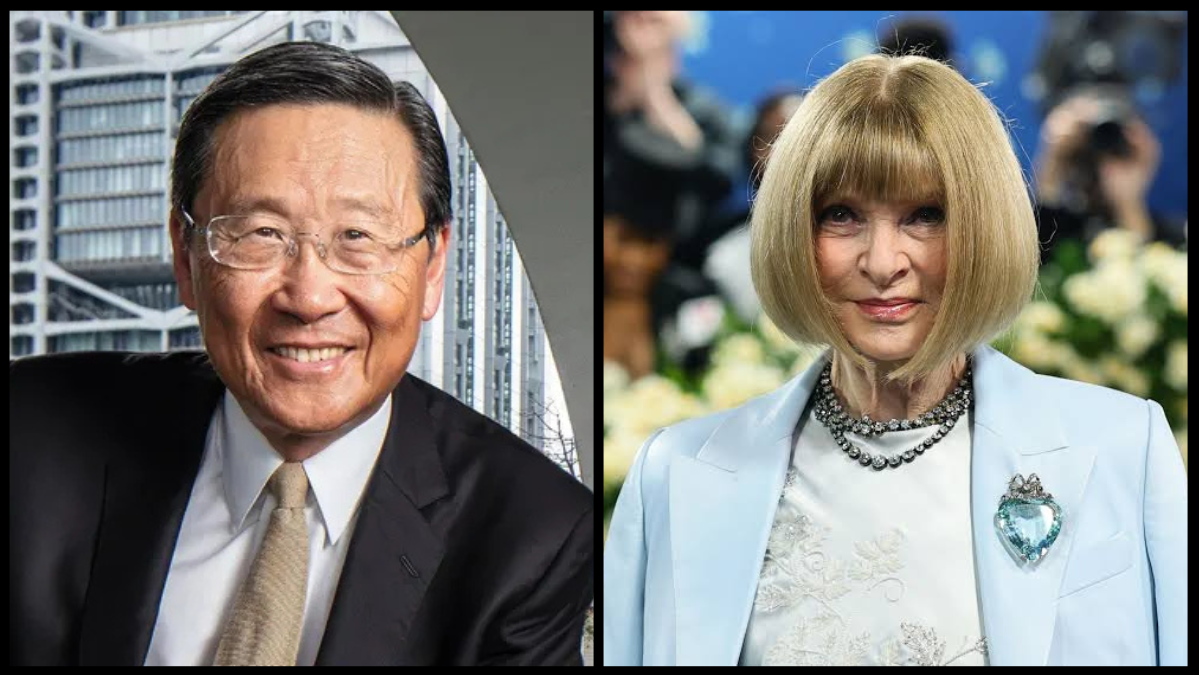
Peter Woo and Anna Wintour: Careers, Influence, Luxury Fashion, and Their Connection
Peter Woo and Anna Wintour are two influential personalities associated with different sides of the international luxury industry. Peter Woo is a Hong Kong businessman known for his achievements in property development, investment, and luxury retail. Anna Wintour, meanwhile, is one of the most recognizable figures in fashion journalism, celebrated for her longstanding association with Vogue and her influence on international fashion culture.
Although their professional backgrounds are different, both have contributed to industries that shape how people experience luxury, fashion, and business. Woo built his reputation through corporate leadership and commercial investments, while Wintour developed her influence through editorial decisions, creative relationships, and fashion publishing.
The combination of these names naturally attracts curiosity about their backgrounds and whether they share a personal or professional relationship. However, it is important to separate documented information from assumptions. There is no established public evidence that they are married, relatives, or direct business partners. Their most meaningful connection is their association with the wider luxury economy.
Understanding their individual stories provides a clearer picture of how business ownership and fashion media influence the same international marketplace.
Who Is Peter Woo?
Hong Kong businessman, investor, and corporate leader
Peter Woo Kwong-ching is a prominent Hong Kong businessman whose career has been closely connected to property development, investment, retail, and corporate leadership. Born in Shanghai in 1946, he eventually became one of the best-known business figures in Hong Kong.
His professional journey demonstrates how education, commercial experience, and strategic decision-making can contribute to building a major business empire. Woo became particularly well known through his leadership of Wheelock and Company and The Wharf (Holdings), two significant names in Hong Kong’s corporate landscape.
Unlike celebrities whose popularity comes from entertainment or social media, Woo has generally maintained a business-focused public image. His influence is reflected in commercial developments, corporate investments, and the growth of companies associated with his family.
His background also makes him an interesting figure in discussions about luxury retail. The wider Woo family business interests include Lane Crawford Joyce Group, a prominent luxury fashion retailer in Asia.
Who Is Anna Wintour?
Fashion journalist, editor, and Condé Nast executive
Anna Wintour is a British-American fashion journalist and media executive who has played a major role in shaping modern fashion publishing. Born on November 3, 1949, in London, England, she grew up in a family with strong connections to journalism and publishing.
Her father, Charles Wintour, was a respected newspaper editor, and his professional environment helped introduce her to the world of media from an early age. She developed an interest in fashion and eventually pursued a career that would make her internationally recognizable.
Wintour became editor-in-chief of American Vogue in 1988. During her leadership, the magazine developed a distinctive editorial identity that combined high fashion, celebrity culture, photography, and contemporary social trends.
Her influence extended beyond magazine pages. She became closely associated with the Met Gala, designer recognition, fashion fundraising, and the international creative community. In 2025, she stepped down from the day-to-day editor-in-chief position at American Vogue while retaining senior global responsibilities at Condé Nast.
Her career illustrates how editorial leadership can influence designers, fashion houses, consumer interests, and cultural conversations.
What Is the Connection Between Peter Woo and Anna Wintour?
The central question surrounding this pairing is whether the two personalities have a direct relationship. Their careers have some connections through the luxury industry, but their professional responsibilities are fundamentally different.
Peter Woo’s business background includes property, corporate investment, and luxury retail interests. Anna Wintour’s influence comes from fashion publishing, editorial leadership, and relationships with designers and cultural organizations.
Both operate in an international environment where reputation, consumer preferences, luxury brands, and commercial success are important. Nevertheless, belonging to the same broad industry does not establish a personal friendship or business partnership.
There is no sufficiently established public evidence confirming that they are relatives, romantic partners, or direct business collaborators. A responsible comparison should therefore focus on their documented achievements rather than speculation.
Their stories are interesting because they demonstrate two different forms of influence. One is connected to business ownership and investment, while the other comes from communication, creativity, and cultural visibility.
Peter Woo’s Early Life and Education
Peter Woo was born in Shanghai, China, in 1946. He later moved to Hong Kong, where he attended St. Stephen’s College. His education provided the foundation for a career that would eventually span international banking, shipping, property development, and corporate investment.
Woo continued his studies in the United States, attending the University of Cincinnati, where he studied physics and mathematics. He subsequently earned an MBA from Columbia Business School in New York. This combination of scientific education and business training helped prepare him for the complex commercial responsibilities he would take on later in life. China-United States Exchange Foundation+1
His professional career began in banking at Chase Manhattan Bank. While working in New York, he met Bessie Pao, whose father was the influential Hong Kong shipping businessman Y.K. Pao. Their relationship eventually brought Woo closer to the international shipping and investment business.
In 1975, Woo joined his father-in-law’s business interests in Hong Kong. This decision marked an important turning point, introducing him to large-scale corporate management and the commercial networks that would shape his future career.
Peter Woo’s Business Career and Achievements
Woo became particularly influential through his leadership of Wheelock and Company and The Wharf (Holdings). These organizations were associated with major property developments, commercial buildings, retail operations, hotels, and other investments.
His leadership helped establish a strong position for the companies in Hong Kong’s competitive property market. Commercial landmarks such as Harbour City and Times Square became important parts of the city’s shopping and business environment. These developments also demonstrate the connection between real estate investment and the luxury retail economy.
Woo’s professional responsibilities extended beyond property. His business interests included logistics, telecommunications, hotels, and high-end fashion retail. This diversified approach helped establish his reputation as a businessman with interests across several important sectors. 團結香港基金 OUR HONG KONG FOUNDATION+1
He eventually stepped away from his leadership positions at Wheelock and Wharf, with his son Douglas Woo becoming part of the next generation of corporate leadership. His career remains an important example of Hong Kong’s development as an international business and financial centre.
Peter Woo’s Connection to Luxury Retail and Fashion
One particularly interesting part of Woo’s business background is its connection to luxury fashion retail. His association with Lane Crawford Joyce Group places the wider family business within the international designer fashion market.
Lane Crawford is a well-known luxury department store brand in Asia. It offers fashion, accessories, beauty products, and lifestyle merchandise from established international designers. Joyce Boutique is another important name within the group’s luxury fashion portfolio.
This retail environment is relevant when discussing Peter Woo and Anna Wintour because fashion publishing and luxury retail frequently influence one another. Retailers provide consumers with access to designer products, while fashion magazines introduce collections, designers, and trends to wider audiences.
The relationship between these industries is commercially important. A designer may gain visibility through editorial coverage and later reach customers through luxury department stores. Retailers, in turn, benefit from the cultural recognition created by influential fashion publications.
However, this broader industry relationship should not be confused with a confirmed partnership between individual business leaders.
Anna Wintour’s Early Life and Family Background
Anna Wintour was born in London on November 3, 1949. Her father, Charles Wintour, was editor of the Evening Standard, while her mother, Eleanor Trego Baker, had an interest in journalism and the arts.
Growing up in this environment exposed Wintour to newspapers, writing, public affairs, and the importance of communication. She developed a strong interest in fashion while still young and became increasingly interested in how clothing reflected culture, personality, and social change.
Her early experiences helped shape her professional ambitions. Rather than following a conventional academic route into journalism, she began gaining practical experience in the fashion publishing industry.
Wintour eventually moved to the United States, where she developed her career through positions at several fashion publications. Her early work gave her experience in editorial planning, photography, fashion reporting, and magazine production. National Women’s History Museum+1
Anna Wintour’s Career at Vogue
Anna Wintour’s career reached a defining stage when she became editor-in-chief of American Vogue in 1988. At the time, the fashion magazine was already an established publication, but her arrival introduced a distinctive editorial direction.
She helped modernize fashion magazine covers by combining designer clothing with celebrity culture and contemporary photography. Her approach made fashion publishing more accessible to readers who were interested in entertainment, lifestyle, and popular culture as well as traditional haute couture.
During her 37 years leading the American edition, Wintour became one of the most recognizable figures in the fashion business. Her editorial decisions influenced which designers received attention, which creative talents gained visibility, and how fashion was presented to international audiences.
Her influence was not limited to choosing magazine covers. She also helped strengthen relationships between fashion houses, photographers, celebrities, advertisers, and cultural organizations.
In June 2025, Wintour announced that she would step away from the day-to-day editor-in-chief position at American Vogue. Chloe Malle subsequently became the publication’s head of editorial content. Wintour retained her roles as Condé Nast’s chief content officer and global editorial director of Vogue. The Associated Press+1
Anna Wintour and the Met Gala
The Met Gala is another major part of Wintour’s professional legacy. Officially associated with the Metropolitan Museum of Art’s Costume Institute, the annual event combines fashion, celebrity culture, art, and fundraising.
Wintour has played a central role in developing the event into one of the most internationally recognized occasions on the fashion calendar. Its red carpet attracts designers, actors, musicians, models, business leaders, and other influential personalities.
The event is more than a glamorous celebrity gathering. It raises money for the Costume Institute and provides an opportunity to explore fashion through carefully selected annual themes. Designers and celebrities use the occasion to present creative interpretations of those themes.
The Met Gala also demonstrates the broader influence of fashion media. Editorial coverage, photography, interviews, and social media discussions help transform an exclusive fundraising event into a global cultural conversation.
Wintour’s involvement illustrates how a fashion editor can influence institutions and events beyond traditional magazine publishing.
Comparing Peter Woo and Anna Wintour’s Professional Influence
Although their careers developed in different industries, comparing their achievements provides an interesting look at how influence operates within the luxury economy.
Woo’s professional reputation comes from business ownership, corporate leadership, investment strategy, and commercial development. Wintour’s reputation comes from editorial authority, creative judgment, cultural influence, and international media leadership.
Their work also demonstrates two different approaches to building long-term professional success. Woo developed business interests through corporate structures and strategic investments, while Wintour built her position through decades of editorial experience and relationships across the fashion industry.
| Comparison | Peter Woo | Anna Wintour |
|---|---|---|
| Main profession | Businessman and investor | Fashion journalist and media executive |
| Birthplace | Shanghai, China | London, England |
| Birth year | 1946 | 1949 |
| Main business association | Wheelock and Wharf | Vogue and Condé Nast |
| Industry | Property, investment, retail | Fashion, publishing, media |
| Known for | Corporate leadership | Fashion editorial influence |
| Luxury connection | Lane Crawford Joyce Group | International Vogue network |
| Major influence | Business and investment | Fashion culture and publishing |
The comparison makes one important point clear: financial influence and cultural influence are not the same thing. Both can be powerful, but they operate through different channels.
How Luxury Fashion Connects Their Professional Worlds
Luxury fashion depends on a complicated international network involving designers, manufacturers, retailers, publishers, photographers, investors, and customers. No single individual or organization controls every part of this system.
Peter Woo’s association with luxury retail represents the commercial side of this environment. Retail businesses bring designer collections to customers, manage premium shopping experiences, and create relationships between international brands and regional markets.
Anna Wintour represents the media and editorial side. Through Vogue, she has helped communicate fashion trends, introduce emerging designers, and bring attention to creative work.
These two areas can influence one another without requiring direct cooperation between the people involved. For example, a designer featured in an influential magazine may receive greater public recognition, while luxury retailers can help turn that interest into commercial demand.
This relationship between media exposure and retail distribution is one reason the careers of Peter Woo and Anna Wintour make an interesting comparison.
Are Peter Woo and Anna Wintour Friends?
There is no reliable public documentation establishing a close personal friendship between the two. Although both are associated with influential circles in international business and fashion, their professional backgrounds do not automatically indicate that they have a personal relationship.
High-profile businesspeople and media executives often attend similar international events, interact with luxury brands, and operate within overlapping professional networks. However, without credible reporting, photographs supported by reliable context, or direct statements, it would be inappropriate to describe them as close friends.
The most accurate interpretation is that Peter Woo and Anna Wintour have connections through the wider luxury and fashion economy rather than a verified personal friendship. Keeping this distinction clear helps readers understand their public profiles without relying on unconfirmed stories.
Are Peter Woo and Anna Wintour Business Partners?
There is no established public evidence of a direct business partnership between them. Their professional activities are associated with different organizations, and no confirmed joint venture or shared corporate leadership arrangement has been identified.
Woo’s business history includes property development, investment management, and luxury retail. Wintour’s responsibilities involve editorial strategy, fashion publishing, and the wider Condé Nast media organization. These activities can intersect commercially, but that does not mean the individuals operate a business together.
For readers researching Peter Woo and Anna Wintour, the distinction between industry connections and formal business relationships is particularly important. A luxury retailer and a fashion publication may benefit from the same brands and consumer markets without sharing ownership or management.
Peter Woo’s Family and Personal Life
Peter Woo is married to Bessie Pao, the daughter of prominent Hong Kong shipping businessman Y.K. Pao. Their marriage connects Woo’s personal history with one of the influential business families in Hong Kong.
The couple has three children: Jacqueline, Jennifer, and Douglas. Their family has maintained significant involvement in business and philanthropic activities, although individual family members have developed their own professional responsibilities.
His son Douglas has taken on important responsibilities within the family’s corporate interests, while Jennifer has been associated with the luxury retail business. This generational transition reflects the importance of family succession in large privately controlled business groups.
Woo has also been involved in public service and charitable initiatives. His activities have included leadership responsibilities in Hong Kong institutions and support for educational opportunities.
Anna Wintour’s Family and Personal Life
Anna Wintour has generally maintained a distinction between her public professional responsibilities and her private family life. She married child psychiatrist David Shaffer in 1984, and they had two children, Charles and Katherine, commonly known as Bee.
The marriage ended in divorce in 1999. Wintour later had a long-term relationship with businessman Shelby Bryan, although she has largely kept the details of her personal relationships away from the public spotlight.
Her family background and professional commitments have attracted attention because of her international profile. Nevertheless, her career achievements remain the central reason for her public recognition.
Her personal life is entirely separate from Peter Woo’s documented family background. There is no established family relationship between the two.
Peter Woo’s Wealth and Business Legacy
Peter Woo has built substantial wealth through decades of involvement in business, investment, and property development. His interests have included major commercial properties, retail operations, hotels, and other corporate assets.
According to Forbes’ billionaire profile, his estimated fortune was approximately $14.1 billion as of November 2, 2026. This is an estimate rather than a fixed amount because billionaire wealth changes with asset valuations, investments, and financial market conditions. TollBit
His legacy is not limited to personal wealth. His leadership helped establish major commercial businesses, while his family’s continued involvement in investment and luxury retail has extended that influence into another generation.
One particularly notable aspect of his legacy is the connection between Hong Kong’s property market and international retail. Shopping destinations such as Harbour City illustrate how commercial real estate can support luxury brands, tourism, and consumer activity.
Anna Wintour’s Influence and Professional Legacy
Anna Wintour’s professional legacy is based on her ability to influence fashion publishing and the wider creative economy. Her work at Vogue helped establish the magazine as an important platform for designers, photographers, models, celebrities, and fashion institutions.
Her editorial approach encouraged a broader understanding of fashion. Rather than treating clothing as an isolated subject, she connected it with entertainment, politics, celebrity culture, photography, and contemporary lifestyles.
She also became known for supporting emerging designers and helping strengthen the relationship between fashion publications and the commercial industry. Her influence can be seen in the way fashion magazines communicate trends and introduce creative talent to international audiences.
A statement Wintour made during the 2025 editorial transition captured her perspective on leadership and professional development:
“Anybody in a creative field knows how essential it is never to stop growing in one’s work.”
Vogue
This idea reflects her decision to move away from the daily management of American Vogue while continuing to oversee its wider international direction.
Why Are Peter Woo and Anna Wintour Frequently Compared?
There are several possible reasons why readers search for these two names together. The most obvious is their association with luxury fashion, an industry that brings together business investment, designer brands, retail, and international media.
Another reason may be curiosity about influential personalities and their professional networks. People often compare business leaders with media executives because both can have considerable influence over consumer culture and commercial decisions.
Their international backgrounds also make the comparison interesting. Woo developed his career primarily through Hong Kong’s business environment and international investments, while Wintour established her reputation through British and American fashion publishing.
However, search interest alone cannot establish that two people have a personal connection. The available biographical and professional information supports a comparison of their careers, not claims of an undisclosed relationship.
What Peter Woo and Anna Wintour Represent in Modern Luxury Culture
The careers of Peter Woo and Anna Wintour demonstrate that luxury culture is shaped by more than expensive products and famous designer labels. It also depends on business leadership, retail infrastructure, creative talent, editorial communication, and international consumer markets.
Woo represents the business side of luxury through property development, investment, and retail interests. His professional history shows how commercial leadership can influence shopping destinations, luxury businesses, and economic development.
Wintour represents the cultural and editorial side. Her career demonstrates how fashion journalism can influence public tastes, support designers, and create international attention around creative industries.
Together, their professional stories provide an interesting perspective on how the luxury economy works. Their influence comes from different responsibilities, but both demonstrate the importance of long-term leadership and international relationships.
Conclusion
Peter Woo and Anna Wintour have established impressive careers in different areas of the international luxury industry. Woo became a prominent Hong Kong businessman through property development, corporate investment, and luxury retail interests. Wintour built an internationally recognized career through fashion journalism, editorial leadership, and her longstanding association with Vogue.
Although their professional interests overlap within the broader luxury economy, there is no established public evidence that they are relatives, romantic partners, or direct business partners. Their stories are best understood as separate examples of influence within business and fashion media.
The comparison between Peter Woo and Anna Wintour ultimately highlights two important sides of modern luxury culture: the commercial power of business ownership and the cultural influence of fashion publishing. Both have contributed to their respective industries, leaving professional legacies that continue to attract international attention.
Frequently Asked Questions
Who is Peter Woo?
Peter Woo Kwong-ching is a Hong Kong businessman and investor born in Shanghai in 1946. He is known for his leadership of Wheelock and Company, The Wharf (Holdings), and his association with luxury retail through Lane Crawford Joyce Group.
Who is Anna Wintour?
Anna Wintour is a British-American fashion journalist and media executive. She became editor-in-chief of American Vogue in 1988 and held the position for 37 years. She currently serves as Condé Nast’s chief content officer and global editorial director of Vogue.
Are Peter Woo and Anna Wintour related?
No confirmed family relationship between them has been established in reliable public sources. Their family backgrounds and personal histories are separate, despite their overlapping connections to the luxury industry.
Are Peter Woo and Anna Wintour married?
No. Peter Woo is married to Bessie Pao, while Anna Wintour was previously married to David Shaffer. There is no reliable evidence suggesting that the two personalities are romantically involved.
Have Peter Woo and Anna Wintour worked together?
There is no established public evidence of a direct business partnership or joint project between them. Their careers are connected indirectly through luxury retail, fashion publishing, and international designer brands.
What is Peter Woo famous for?
Peter Woo is famous for his achievements in Hong Kong business, particularly his leadership of major property and investment companies. He is also associated with luxury retail, commercial developments, and philanthropic activities.
What is Anna Wintour’s current position?
Anna Wintour serves as chief content officer at Condé Nast and global editorial director of Vogue. Although she stepped down from the day-to-day editor-in-chief position at American Vogue in 2025, she continues to hold significant editorial and strategic responsibilities.
What is Peter Woo’s estimated net worth?
Forbes estimated Peter Woo’s wealth at approximately $14.1 billion in November 2026. This figure can change depending on investments, company valuations, and financial market conditions.
Why are Peter Woo and Anna Wintour discussed together?
Their names are associated with different sides of the luxury industry. Woo is known for business leadership and luxury retail, while Wintour is recognized for fashion journalism and editorial influence. This professional overlap makes their careers interesting to compare, but it does not establish a personal relationship.
What is the biggest difference between Peter Woo and Anna Wintour?
The biggest difference is their professional background. Peter Woo built his reputation through business ownership, investment, and property development, whereas Anna Wintour established her influence through fashion journalism, publishing, and international media leadership.
Read also Eddie Murphy and Jamie Dimon: Careers, Wealth, Success, and the Surprising Connection