
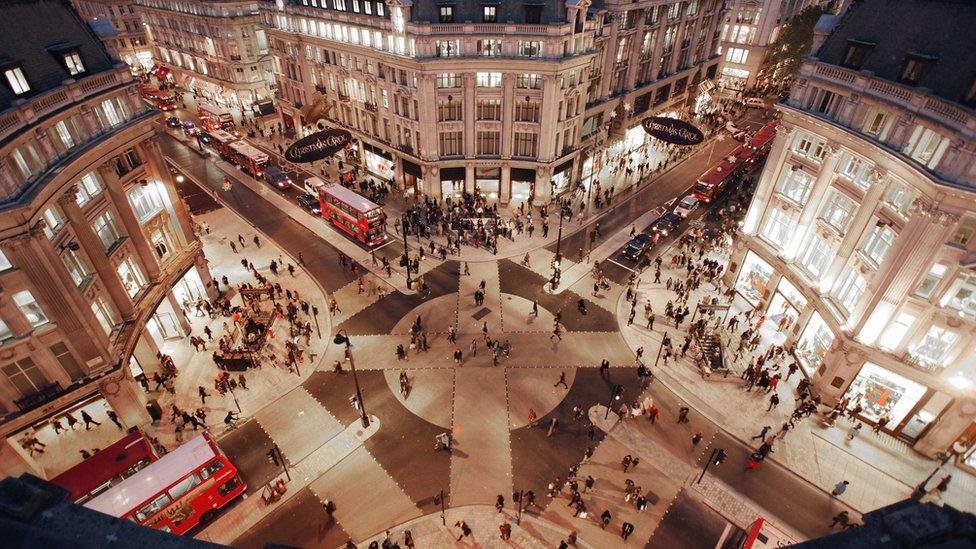
Oxford Street Pedestrianisation: How London’s Famous Shopping Street Is Changing
Oxford Street has been one of London’s most recognisable destinations for shopping, tourism and entertainment for generations. Stretching through the heart of the West End, it attracts millions of visitors every year, offering everything from international fashion brands and department stores to restaurants, cafés and cultural attractions. However, increasing congestion, crowded pavements, air pollution and changing shopping habits have created growing pressure to improve the area. This is where Oxford Street pedestrianisation comes into the picture.
The project represents an important change in how one of Britain’s busiest commercial streets is designed and experienced. Rather than allowing motorised traffic to dominate the road, the initiative aims to create more space for pedestrians, improve public areas and make shopping more comfortable. The first major section officially became permanently traffic-free on 26 October 2026, marking a significant milestone in London’s urban development.
The transformation is not simply about removing vehicles. It is also about supporting local businesses, improving accessibility, encouraging tourism and creating a more attractive environment for people who visit, work or live nearby. With further improvements planned, the project could influence the future of London’s high streets and become an important example of modern urban planning.
What Is Oxford Street Pedestrianisation?
Oxford Street pedestrianisation refers to the process of removing motorised traffic from selected sections of Oxford Street and transforming the available road space into an environment designed primarily for pedestrians. The central idea is to give people more room to walk, shop, meet friends and enjoy the surrounding businesses without constantly navigating busy traffic.
The project is being led by the Mayor of London, Sadiq Khan, working alongside Transport for London (TfL) and the Oxford Street Development Corporation (OSDC). Its wider objectives include creating a safer public environment, supporting economic growth and strengthening Oxford Street’s position as an internationally recognised shopping destination.
The first phase covers approximately one kilometre between Orchard Street and Great Portland Street. Since 26 October 2026, this section has been permanently closed to private motorised vehicles, buses, taxis, private hire vehicles, cycles, scooters and pedicabs.
Importantly, the transformation is taking place in stages. The initial traffic restrictions provide an opportunity to introduce temporary improvements, observe how people use the new space and collect feedback before more permanent public-realm improvements are completed.
Why Is London Transforming Oxford Street?
Oxford Street has faced several challenges over recent decades. Although it remains a major shopping destination, changes in consumer behaviour, online shopping, international competition and the economic effects of the pandemic have affected traditional high-street retail.
Congestion has also been a long-standing concern. Large numbers of buses, taxis and other vehicles previously shared the road with thousands of pedestrians. During busy shopping periods, this combination created an uncomfortable environment for visitors and made it difficult for people to move freely.
Another important concern is the quality of the public environment. Narrow walking areas, vehicle noise, pollution and limited opportunities to sit or relax have affected the overall shopping experience.
The transformation aims to address these problems by making the street more attractive and comfortable. Instead of treating Oxford Street mainly as a transport corridor, the authorities want to establish it as a destination where shopping, entertainment, leisure and public activities can coexist.
The Elizabeth line has also strengthened the case for changing the street. Since its opening in 2022, improved connections through Bond Street and Tottenham Court Road stations have made travelling to the West End more convenient for many visitors.
When Did Oxford Street Pedestrianisation Begin?
Although the current project has gained considerable attention, the idea of making Oxford Street more pedestrian-friendly is not new. Different proposals have been discussed for many years, with previous attempts facing political disagreements, transport challenges and concerns from local businesses.
Traffic-free shopping days were introduced in 2005 under the Very Important Pedestrian initiative. These special events demonstrated how the street could function without ordinary traffic, particularly during the busy Christmas shopping season.
In 2016, further proposals emerged under Mayor Sadiq Khan, with detailed plans being consulted on in 2017. However, disagreements involving Westminster City Council and other stakeholders prevented those proposals from progressing as originally intended.
The latest transformation gained momentum in September 2024, when the Mayor announced a renewed proposal to pedestrianise Oxford Street and establish a dedicated development organisation.
A major public consultation followed between February and May 2025. More than 6,000 people participated, and around two-thirds of respondents who expressed a view supported pedestrianisation.
The Oxford Street Development Corporation was subsequently established on 1 January 2026 to lead the wider regeneration programme.
In February 2026, the Mayor approved the next steps for removing traffic from the western section. Following further consultation, the project moved towards implementation, culminating in the traffic-free opening on 26 October 2026.
Which Part of Oxford Street Is Now Pedestrianised?
The first phase focuses on the section between Orchard Street and Great Portland Street. This covers almost one kilometre of the famous shopping street and includes a substantial part of the area around Oxford Circus.
The location was selected as the initial focus because it contains some of Oxford Street’s busiest retail destinations. It also provides an opportunity to test a new approach to managing pedestrians, deliveries, public transport and surrounding roads.
The wider Oxford Street area extends from Marble Arch in the west towards Tottenham Court Road in the east. However, the entire length has not automatically become pedestrian-only under the first phase.
Any future expansion will require further consideration, transport planning and the necessary approvals. The authorities are also examining how improvements can benefit the wider West End rather than concentrating exclusively on the first traffic-free section.
This distinction is important for visitors planning journeys. Someone travelling to a shop on the newly pedestrianised section will experience different traffic arrangements from someone visiting a business outside the initial boundaries.
Key Features of the Oxford Street Transformation
The transformation involves much more than introducing restrictions on vehicles. The wider vision is to improve the appearance, comfort and functionality of the street.
One of the most noticeable planned changes involves introducing more greenery. The development programme includes more than 50 new trees, creating a more pleasant environment and helping soften the appearance of the busy shopping district.
Public seating is another important feature. More than 100 seats, alongside dining tables and dedicated resting areas, are planned to give visitors additional opportunities to relax during their journeys.
Two public squares are also part of the improvement programme. These spaces are intended to provide areas for meeting, community activities and special events.
Other proposed improvements include better lighting, clearer signage and upgraded public spaces. Together, these features should help create a more organised and welcoming shopping environment.
| Planned feature | Expected improvement |
|---|---|
| More than 50 new trees | Greener and more attractive surroundings |
| Over 100 seats | Additional places to rest |
| Two public squares | Space for events and social activities |
| Better lighting | Improved visibility and street appearance |
| Improved signage | Easier navigation for visitors |
| Pedestrian-focused public space | More room for walking and shopping |
| Dining and resting areas | A more comfortable visitor experience |
These improvements are expected to be introduced progressively, with the first major public-realm enhancements targeted for completion by the end of spring 2027.
How Will the Changes Affect Shoppers and Visitors?
For shoppers, one of the biggest advantages will be the opportunity to explore the street without dealing with ordinary road traffic. Visitors will have more freedom to move between shops, department stores and restaurants within the pedestrianised section.
This could make shopping particularly enjoyable during busy periods such as Christmas, Black Friday and seasonal sales. Instead of concentrating on avoiding vehicles, pedestrians can focus on finding shops, meeting friends and enjoying the atmosphere.
Families may also benefit from a more comfortable environment. Parents pushing prams and people travelling with children should find it easier to navigate a space designed around pedestrians.
Tourists could experience similar advantages. Oxford Street is an important part of London’s international visitor economy, and improvements to the public environment may encourage visitors to spend more time in the area.
The availability of additional seating and resting spaces could also make longer shopping trips more manageable for older visitors and people who need regular breaks.
However, visitors should remember that the traffic restrictions also affect cycles and scooters. The new section is not simply a conventional road with fewer cars; it has been designed as a traffic-free environment with pedestrian use as its priority.
What Does the Project Mean for Local Businesses?
Local businesses are among the most important stakeholders in the transformation. Oxford Street contains major department stores, independent retailers, fashion brands, cafés, restaurants and numerous service providers.
A more attractive shopping environment could help businesses by encouraging people to spend additional time in the area. Visitors who feel comfortable walking around may be more likely to explore several shops rather than visiting one destination and leaving immediately.
The project also offers opportunities for restaurants and cafés. Improved public spaces, seating and pedestrian movement could help create a stronger environment for hospitality businesses.
However, the effects will not necessarily be positive for every business. Some retailers depend on deliveries, maintenance vehicles and regular commercial access. Changes to traffic arrangements may require them to adjust their logistics and delivery schedules.
Smaller businesses may face particular difficulties if they have limited storage facilities or depend on frequent deliveries.
That is why overnight delivery arrangements and access for essential servicing are important parts of the wider transport strategy. Businesses need reliable arrangements that allow them to operate without compromising the pedestrian environment.
The long-term success of the project will depend on whether increased visitor activity translates into meaningful commercial benefits for retailers, restaurants and other local employers.
How Will Traffic and Public Transport Be Affected?
Removing traffic from a busy shopping street requires careful planning because vehicles still need to reach destinations throughout the surrounding area.
Before the transformation, several bus routes operated along Oxford Street. These services played an important role in connecting shoppers, workers and residents with the wider London transport network.
The new arrangements require changes to bus routes and stops. TfL has developed alternative routes to maintain public transport connections while removing buses from the pedestrianised section.
Some services are being redirected through surrounding streets, including routes around Wigmore Street and Henrietta Place. This means passengers may need to use different stops depending on their destination.
The impact on surrounding roads is another important consideration. Traffic removed from one street does not necessarily disappear from the transport network. Some vehicles may travel through alternative routes, potentially increasing congestion or noise in neighbouring areas.
Transport modelling and monitoring will therefore be essential. Authorities need to understand how traffic movements change after implementation and whether additional adjustments are required.
For visitors, the Underground and Elizabeth line remain particularly useful options for reaching Oxford Street.
The Role of the Oxford Street Development Corporation
The Oxford Street Development Corporation is a central organisation responsible for leading the wider regeneration programme.
Established on 1 January 2026, the organisation was created to provide focused leadership and coordinate the long-term transformation of Oxford Street and its surrounding area.
Its responsibilities extend beyond pedestrianisation. The organisation is also involved in planning, public-realm improvements, development strategy and supporting the area’s economic future.
Another important responsibility is working with different stakeholders. This includes retailers, property owners, residents, transport authorities, local councils and organisations representing accessibility interests.
Having a dedicated organisation allows the regeneration programme to operate with a more coordinated approach. Rather than relying on separate projects with different priorities, the corporation can work towards a shared vision for the area.
Its long-term ambition is to make Oxford Street a destination that combines retail with leisure, hospitality, culture and improved public spaces.
Environmental Benefits of a Traffic-Free Oxford Street
Environmental improvement is another major reason behind the project. Removing motorised vehicles from the selected section creates opportunities to reduce direct vehicle emissions and improve the immediate street environment.
Air quality has been a concern in busy central London locations for many years. Although wider pollution levels depend on traffic throughout the surrounding area, reducing vehicle activity on Oxford Street is an important step towards creating a healthier public environment.
Noise reduction is another potential benefit. The absence of ordinary traffic can make conversations, outdoor activities and walking more comfortable.
The introduction of trees and greenery may also improve the appearance of the area. Trees can provide shade, contribute to urban biodiversity and help make heavily built-up environments more pleasant.
However, it is important to distinguish between local improvements and wider environmental outcomes. Traffic may be redirected onto surrounding roads, so the overall effect depends on how successfully the entire transport network is managed.
The environmental value of the scheme will become clearer as authorities collect information about traffic, air quality, public transport and how people use the new space.
Accessibility and Inclusion for Everyone
A successful pedestrianised street must work for people with different mobility requirements. Removing traffic can create significant opportunities, but the design must also address practical accessibility challenges.
People using wheelchairs, mobility scooters and walking aids need smooth, predictable surfaces and sufficient space to move safely. Clear routes are equally important for people with visual impairments.
The provision of accessible public transport is another important factor. Improvements to step-free access at nearby Elizabeth line stations, particularly Bond Street and Tottenham Court Road, have strengthened connections to the area.
Seating will also play an important role. Regular resting places can make the street more manageable for older people and visitors who cannot comfortably walk long distances.
Clear signage, suitable lighting and thoughtful street layouts can help people understand where they can walk and how to reach different destinations.
The authorities must continue engaging with disability organisations and accessibility groups as the temporary arrangements develop into more permanent designs.
A genuinely successful project should make Oxford Street easier to enjoy for everyone, not simply create a more attractive environment for people who are already comfortable walking long distances.
Challenges and Criticism Surrounding the Project
Despite considerable support, the transformation has also attracted concerns. Large urban development projects inevitably involve competing interests, particularly when they change how an established commercial area operates.
One of the main concerns involves traffic displacement. Removing vehicles from Oxford Street may increase traffic on nearby roads, potentially affecting residents, businesses and public transport users.
Bus passengers may also experience inconvenience if alternative stops are further away from their destinations or if routes become less direct.
Another issue concerns delivery access. Retailers require dependable arrangements for receiving stock, removing waste and maintaining their premises. Without effective logistics, businesses could experience additional costs.
There are also questions about how the street will be maintained. A busy pedestrian environment needs regular cleaning, waste collection, security and repairs.
Westminster City Council continues to have an important role in the surrounding area, including street cleaning responsibilities within the pedestrianised section.
Cost and long-term investment are further considerations. Creating a successful public space requires more than removing vehicles. It involves landscaping, lighting, seating, maintenance and continuous management.
The project will need to demonstrate that its economic, environmental and social benefits justify the investment.
What Is the Future of Oxford Street?
The future vision extends beyond the first traffic-free section. The Mayor and Oxford Street Development Corporation want to create a more attractive destination across the wider shopping district.
The initial transitional scheme provides an opportunity to understand how visitors respond to the new environment. Information collected during this period can help designers make adjustments before permanent improvements are finalised.
The first phase of public-realm improvements is expected to introduce trees, seating, public squares, lighting and improved signage by the end of spring 2027.
The longer-term design process is also progressing. The February 2026 mayoral decision identified November 2027 as a target for progressing the permanent design from design development towards concept design.
Further traffic management changes beyond the initial section are not guaranteed. Any additional pedestrianisation proposals will need appropriate consultation and approvals.
The wider ambition is to create a shopping district that remains commercially successful while offering a better experience for Londoners and international visitors.
If the first phase delivers the expected improvements, it could provide a foundation for further changes across the West End.
Why Oxford Street Matters to London’s Economy
Oxford Street is much more than a famous shopping location. It is an important part of London’s economy, attracting international tourists, supporting employment and providing space for hundreds of businesses.
The street also contributes to the identity of the West End. Its department stores, fashion retailers and entertainment destinations have helped establish London as one of the world’s major shopping cities.
However, retail competition has changed considerably. Consumers now have more choices, including online marketplaces, shopping centres and retail destinations in other international cities.
To remain competitive, Oxford Street needs to offer experiences that cannot easily be reproduced through online shopping.
A more attractive pedestrian environment could help achieve this objective. Public events, outdoor activities, hospitality and comfortable shopping spaces can give visitors additional reasons to spend time in the area.
The economic benefits will depend on how successfully the improvements attract customers and support existing businesses.
A thriving high street requires more than impressive public spaces. It also needs a diverse retail offering, reasonable operating conditions, good transport connections and a welcoming atmosphere.
Conclusion
Oxford Street is entering an important new chapter in its history. The removal of ordinary traffic from the first major section on 26 October 2026 marks a significant step towards creating a more pedestrian-friendly shopping destination in central London.
The wider Oxford Street pedestrianisation programme aims to improve the visitor experience through greener public spaces, additional seating, better lighting, improved accessibility and new opportunities for events and leisure activities.
Nevertheless, its success will depend on more than the removal of vehicles. Traffic management, reliable deliveries, accessible transport, business support and effective maintenance will all play important roles in determining the project’s long-term value.
The coming months and years will show how effectively the new arrangements work in practice. If the planned improvements deliver their intended benefits, Oxford Street could become an excellent example of how a historic high street can adapt to modern shopping habits while maintaining its commercial importance.
Ultimately, the goal is to create a place where people can shop, walk, relax and enjoy London in a more comfortable environment.
Frequently Asked Questions
What is Oxford Street pedestrianisation?
Oxford Street pedestrianisation is a regeneration project that removes ordinary traffic from selected sections of London’s famous shopping street. It aims to create more pedestrian space, improve public areas, support businesses and make the shopping experience more enjoyable.
When did Oxford Street become pedestrianised?
The first major section became permanently traffic-free on 26 October 2026. The initial phase covers almost one kilometre between Orchard Street and Great Portland Street.
Can cars drive on Oxford Street now?
Private motorised vehicles are prohibited from the initial pedestrianised section between Orchard Street and Great Portland Street. Other sections of Oxford Street have separate traffic arrangements, so restrictions depend on the exact location.
Are buses allowed on the pedestrianised section?
No. Ordinary bus services are excluded from the initial traffic-free section. TfL has introduced alternative routes and transport arrangements to maintain connections for passengers.
How will pedestrianisation benefit local businesses?
A more attractive shopping environment could encourage visitors to spend more time in the area, explore additional shops and use local restaurants and cafés. However, businesses will also need suitable delivery and servicing arrangements.
Will Oxford Street pedestrianisation improve air quality?
Removing motorised traffic can reduce direct vehicle emissions within the affected section. However, the overall environmental impact will also depend on traffic movements across surrounding roads and wider changes to London’s transport network.
Is Oxford Street completely pedestrianised?
No. The first phase covers the section between Orchard Street and Great Portland Street. The wider stretch towards Marble Arch and Tottenham Court Road has not automatically become traffic-free, and any further changes require additional planning and approvals.
What improvements are planned for Oxford Street?
Plans include more than 50 new trees, over 100 seats, two public squares, dining areas, improved lighting and better signage. The first major public-realm improvements are targeted for completion by the end of spring 2027.
Who is responsible for the Oxford Street transformation?
The Mayor of London, Transport for London and the Oxford Street Development Corporation are central to delivering the programme. The development corporation leads the wider regeneration strategy, while TfL has an important role in transport and highway arrangements.
What is the long-term goal of the project?
The long-term ambition is to establish Oxford Street as a more attractive international shopping and leisure destination. The vision combines retail, hospitality, culture, public events and comfortable pedestrian spaces while supporting London’s wider economy.
Read also LuckyCrush: Features, How It Works, Pricing, Safety, and User Experience