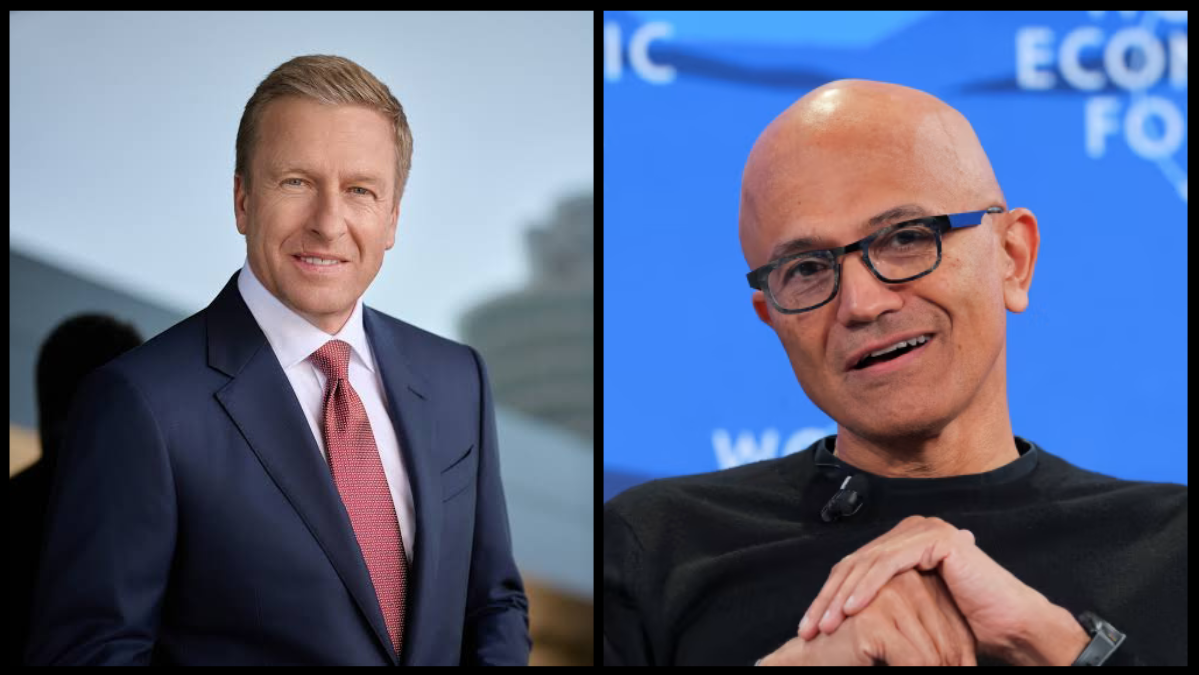
Oliver Zipse and Satya Nadella: Exploring the Connection Between BMW and Microsoft
The worlds of automotive engineering and technology are becoming increasingly connected. Traditional car manufacturers are no longer competing only through vehicle design, engine performance, and production quality. They must also invest in artificial intelligence, cloud computing, digital services, connected vehicles, and software development. This transformation has created opportunities for partnerships between companies that once operated in completely different industries.
Oliver Zipse and Satya Nadella are two influential business leaders whose professional careers reflect this changing business environment. Zipse became widely recognised for his leadership at BMW, one of Germany’s most respected automotive manufacturers, while Nadella transformed Microsoft into a major force in cloud computing, enterprise software, and artificial intelligence.
Although they lead businesses in different sectors, their professional worlds intersect through the long-standing technology partnership between BMW Group and Microsoft. Their story offers an interesting look at how automotive manufacturing and digital technology can work together to shape the future of mobility.
Understanding their individual careers, leadership philosophies, and companies provides a clearer picture of why this connection matters in the modern business landscape.
Who Are Oliver Zipse and Satya Nadella?
Oliver Zipse is a German business executive who became chairman of the board of management of BMW AG in August 2019. Before reaching the company’s highest leadership position, he spent decades working across different areas of BMW, including production, technical planning, and corporate strategy. His experience gave him a detailed understanding of the automotive industry, from factory operations to international business development.
Satya Nadella is an Indian-born technology executive who became Microsoft’s chief executive officer in February 2014. He later also became the company’s chairman. His leadership has been closely associated with Microsoft’s transformation into a cloud-focused technology business and its growing investment in artificial intelligence. His background in computer science and business management helped him guide the company through a major period of technological change. American Academy of Arts and Sciences+2
The professional connection between Oliver Zipse and Satya Nadella is particularly interesting because both leaders recognise the importance of digital transformation. BMW needs advanced software and computing infrastructure to develop modern vehicles, while Microsoft provides technologies that help businesses manage information, improve operations, and create new digital products.
Their companies demonstrate how traditional industrial expertise and modern technological capabilities can complement one another.
Oliver Zipse’s Career and Journey at BMW
Born on 7 February 1964 in Heidelberg, Germany, Oliver Zipse developed an academic background that combined engineering, mathematics, and business management. He studied computer science and mathematics at the University of Utah before pursuing mechanical engineering at the Technical University of Darmstadt. He later completed an executive MBA programme through WHU and the Kellogg School of Management.
Zipse joined BMW in 1991, beginning a professional journey that would eventually lead him to the company’s highest executive position. Rather than building his career through one specialised department, he gained experience across several important business functions. His responsibilities included production planning, technical development, and manufacturing operations. This broad experience helped him understand the relationship between engineering excellence and commercial success.
One particularly important stage of his career involved working at BMW’s MINI production facility in Oxford, United Kingdom. He served as managing director of the plant between 2007 and 2008, gaining valuable international management experience. He subsequently held senior positions in technical planning and group strategy before joining BMW’s board of management in 2015.
In August 2019, Zipse became chairman of BMW’s board of management. His appointment came during a period when the automotive industry was experiencing major changes involving electric mobility, emissions regulations, digital technology, and competition from new manufacturers.
His leadership focused on maintaining BMW’s premium automotive identity while preparing the company for a different technological future. He also supported a technology-neutral approach that allowed BMW to develop electric, hybrid, and conventional vehicles rather than relying on a single drivetrain strategy.
Oliver Zipse’s Departure From BMW
An important development in Zipse’s professional story occurred in May 2026. After spending 35 years with BMW, he concluded his tenure on the company’s board of management following the annual general meeting on 13 May 2026.
BMW officially transferred the chairmanship to Milan Nedeljković on 14 May 2026. Nedeljković had previously been responsible for BMW’s production division and had worked for the company since 1993. Zipse’s departure marked the end of a significant chapter in BMW’s corporate history. BMW Group Newsroom+1
Satya Nadella’s Journey From Hyderabad to Microsoft Leadership
Satya Nadella’s professional journey offers a different but equally interesting perspective on business leadership. Born in Hyderabad, India, he developed an early interest in technology and education. He studied electrical engineering at Mangalore University before moving to the United States for postgraduate studies.
Nadella earned a master’s degree in computer science from the University of Wisconsin–Milwaukee and later completed an MBA at the University of Chicago. These qualifications provided a strong foundation for his career in the technology industry.
Before joining Microsoft, he worked at Sun Microsystems, gaining experience in the rapidly developing software and computing sector. He joined Microsoft in 1992 and gradually became one of the company’s most important executives.
During his early years at Microsoft, Nadella worked across enterprise software, online services, and business technology. His leadership responsibilities expanded considerably when he became executive vice president of Microsoft’s Cloud and Enterprise group.
In February 2014, Nadella was appointed Microsoft’s chief executive officer. He became chairman of the board in June 2021, adding another important responsibility to his leadership role.
His tenure has been associated with Microsoft’s growing emphasis on cloud infrastructure, artificial intelligence, developer tools, cybersecurity, and enterprise services. Products and platforms such as Azure, Microsoft 365, GitHub, and Copilot have become important parts of the company’s wider business strategy. American Academy of Arts and Sciences+2
Nadella’s Leadership Philosophy
One of Nadella’s most recognised leadership contributions has been encouraging a culture of continuous learning and collaboration. He has emphasised the importance of moving away from internal competition and focusing more strongly on customer needs and technological opportunities.
This approach helped Microsoft strengthen its position in cloud computing and develop relationships with businesses across numerous industries. Instead of treating technology as a separate department, Nadella has promoted the idea that digital capabilities should become part of almost every organisation’s operations.
His philosophy is especially relevant to the automotive sector. Modern vehicles increasingly depend on software, connected services, advanced computing systems, and continuous digital improvements. Consequently, car manufacturers need technology partners that understand how to deliver reliable solutions on a global scale.
How Oliver Zipse and Satya Nadella Are Connected
The connection between these executives is best understood through the business relationship between BMW Group and Microsoft. Their companies have worked together on several technology initiatives involving cloud computing, industrial Internet of Things systems, connected vehicles, and intelligent manufacturing.
It is important to distinguish between a documented corporate partnership and a personal relationship. Publicly available company announcements establish BMW and Microsoft’s collaboration, but they do not establish that Zipse and Nadella have a personal friendship or a separate business arrangement between themselves.
The partnership between their organisations dates back several years. BMW and Microsoft have explored ways to use digital infrastructure to improve manufacturing operations, develop vehicle-related services, and create more efficient business processes.
In 2019, the companies announced the Open Manufacturing Platform, an initiative designed to encourage collaboration across the manufacturing industry. The project aimed to make industrial technology development more open and efficient by providing a framework for sharing solutions and working with common standards.
The initiative reflected an important business idea: manufacturers do not necessarily need to solve every technological challenge independently. By collaborating with technology companies and other industrial organisations, they can develop solutions more quickly and improve production processes.
Oliver Zipse and Satya Nadella represent two sides of this transformation. One brought extensive experience in automotive production and industrial management, while the other led a technology company with expertise in cloud infrastructure and enterprise software.
The Open Manufacturing Platform
The Open Manufacturing Platform was announced in April 2019 at Hannover Messe in Germany. BMW and Microsoft presented it as a community initiative intended to accelerate industrial Internet of Things development and encourage the creation of smart factory solutions.
The platform was built around Microsoft Azure industrial IoT technology and open standards. Its purpose was to help manufacturers develop solutions that could be adapted to different industrial environments.
The potential applications included digital feedback systems, predictive maintenance, supply chain management, and automated factory logistics. These technologies could help manufacturers reduce operational delays, improve equipment performance, and gain better visibility into production activities.
At the time of the announcement, Oliver Zipse was a member of BMW’s board of management responsible for production. He explained the business value of the initiative with a particularly relevant observation:
“Mastering the complex task of producing individualized premium products requires innovative IT and software solutions.”
The statement captured the challenge facing modern car manufacturers. Producing premium vehicles involves coordinating thousands of components, suppliers, production systems, and quality checks. Digital technology can help bring these complicated processes together. Source+1
BMW and Microsoft’s Partnership in Cloud Computing
Cloud computing has become one of the most important technologies supporting the modern automotive industry. Manufacturers generate enormous quantities of information through vehicle testing, factory equipment, customer applications, logistics systems, and connected services.
Managing this information through traditional infrastructure can be expensive and complicated. Cloud platforms offer greater flexibility by allowing businesses to store, process, and analyse data across distributed computing environments.
Microsoft Azure has played an important role in BMW’s digital development. The partnership demonstrates how a global automotive company can use enterprise cloud services to improve software delivery and customer experiences.
One example is BMW’s My BMW application, which connects vehicle owners with digital services. The application supports features that allow customers to access information about their vehicles and interact with BMW’s connected ecosystem.
Microsoft reported in September 2024 that the My BMW and MINI applications were using Azure infrastructure to support their growing international user base. The company highlighted the importance of scalability, reliable performance, and efficient software development. Microsoft Customer Stories+1
Why Cloud Technology Matters for BMW
Cloud infrastructure provides several advantages for automotive manufacturers.
- Scalability: Cloud services can support changing demand as more customers use connected vehicle applications.
- Data management: Manufacturers can process information from vehicles, factories, and development teams more efficiently.
- Software development: Cloud-based tools help engineering teams build, test, and deploy software.
- Customer experience: Connected applications can provide more responsive digital services.
- Operational efficiency: Better access to information can help teams identify problems and make decisions more quickly.
These advantages are not limited to BMW. Automotive companies worldwide are investing in similar technologies because digital services are becoming an important part of the customer experience.
Artificial Intelligence and the Future of Automotive Manufacturing
Artificial intelligence is another major area connecting the automotive and technology industries. Modern vehicles contain sophisticated electronic systems, while manufacturing facilities depend on increasingly advanced software and data analysis.
AI can support engineers by helping them identify patterns, analyse test results, detect potential problems, and improve product development. It can also help manufacturers understand complex information generated by vehicles during testing.
Microsoft’s AI technologies provide tools that businesses can integrate into their existing systems. For BMW, these capabilities are particularly valuable because automotive engineering involves large volumes of technical information.
The relationship between Oliver Zipse and Satya Nadella therefore reflects a wider industrial shift. Automotive manufacturers increasingly need software expertise, while technology companies are finding new opportunities in transportation, manufacturing, and mobility services.
BMW’s Use of Microsoft Azure AI
BMW’s work with Azure has expanded beyond basic cloud infrastructure. In January 2025, Microsoft published a customer story explaining how BMW used Azure services to modernise its Mobile Data Recorder system.
The system helps engineers collect and analyse vehicle development information. It can process more than 10,000 signals per vehicle, supporting detailed technical evaluation during the development process.
Microsoft also described how BMW engineers could use a GPT-4o-powered copilot to interact with technical data through natural language. This approach makes complex information more accessible to employees who may not have specialist data-querying skills.
The development illustrates how AI can improve engineering productivity without replacing the specialist knowledge required to design and test vehicles. Microsoft Customer Stories
Multi-Agent AI and Faster Vehicle Testing
BMW’s use of Microsoft technology continued to develop in November 2025, when Microsoft published another customer story about AI-supported vehicle testing.
According to Microsoft, BMW modernised its Mobile Data Recorder system using Azure and multi-agent AI technology. The system was designed to make large quantities of vehicle telemetry data more accessible to engineers.
BMW vehicles under development can generate between five and ten terabytes of test data each week. The updated system reportedly delivered insights up to 12 times faster, helping engineering teams analyse information and make decisions more efficiently.
This development is important because vehicle development involves extensive testing under different road, weather, and operating conditions. Faster access to useful information can help engineers identify technical issues earlier and improve development cycles. Microsoft Customer Stories
Comparing Oliver Zipse and Satya Nadella
Although these executives worked in different industries, their careers reveal several similarities. Both reached senior leadership positions through long professional journeys, and both were involved in organisations undergoing significant technological change.
However, their responsibilities and areas of expertise were different. Zipse focused on automotive manufacturing, product strategy, and industrial operations, while Nadella concentrated on software, cloud services, and technology infrastructure.
| Category | Oliver Zipse | Satya Nadella |
|---|---|---|
| National background | German | Indian-born American |
| Industry | Automotive | Technology |
| Company | BMW Group | Microsoft |
| Major leadership role | Former BMW chairman | Microsoft chairman and CEO |
| Joined company | BMW in 1991 | Microsoft in 1992 |
| Became CEO/chairman | BMW chairman in 2019 | Microsoft CEO in 2014 |
| Main expertise | Engineering and manufacturing | Software and cloud computing |
| Major strategic focus | Electric mobility and Neue Klasse | Cloud computing and AI |
The comparison shows why their professional connection is interesting. They operate in different markets, but the success of modern automotive businesses increasingly depends on technologies developed by companies such as Microsoft.
Leadership Styles and Business Strategies
Business leadership involves more than managing employees and making financial decisions. Successful executives must understand changing customer expectations, technological developments, competitive pressures, and long-term investment requirements.
Zipse’s leadership approach was shaped by his extensive experience inside BMW. Having worked in production, planning, and strategy, he understood the practical challenges of managing a global automotive manufacturer.
His focus on technology neutrality reflected the complexity of the global vehicle market. Different countries have different charging infrastructures, customer preferences, regulations, and economic conditions. Supporting multiple drivetrain technologies allowed BMW to address a wider range of market requirements.
Nadella’s leadership approach has centred on technological transformation and organisational culture. His tenure at Microsoft has seen the company strengthen its cloud business, expand its developer ecosystem, and invest heavily in AI.
The common theme is adaptability. Both executives understood that established companies cannot rely entirely on historical success. They must continue investing in new capabilities to remain competitive.
Innovation as a Shared Business Priority
Innovation can mean different things depending on the industry. In automotive manufacturing, it may involve developing electric vehicles, improving battery technology, or creating more efficient production processes.
In the technology industry, innovation may involve building more powerful cloud platforms, developing AI models, and improving software tools.
Despite these differences, innovation often requires similar organisational qualities. Businesses need skilled employees, effective research and development teams, reliable infrastructure, and a willingness to test new ideas.
The collaboration between BMW and Microsoft demonstrates how companies can combine different types of expertise to address common challenges.
BMW’s Neue Klasse Strategy and Digital Transformation
One of the most important projects associated with Zipse’s leadership was BMW’s Neue Klasse programme. It represents a major transformation in the company’s vehicle architecture, design philosophy, and technological capabilities.
The Neue Klasse platform focuses on electric mobility, digital features, improved efficiency, and a more integrated vehicle architecture. Rather than treating electric vehicles as isolated products, BMW developed a broader technological foundation intended to influence future generations of vehicles.
This strategy also highlights the growing importance of software in automotive development. Modern vehicles need sophisticated computing systems to manage driving functions, entertainment, connectivity, and energy efficiency.
Microsoft’s cloud and AI technologies offer useful capabilities for manufacturers working on these developments. Although the Neue Klasse is BMW’s own strategic programme, digital partnerships can help support the wider technological environment in which such vehicles are developed.
The Importance of Digital Innovation in Electric Vehicles
Electric vehicles are changing the automotive industry in several ways. Battery management, charging systems, software updates, and connected services are becoming increasingly important to vehicle performance and ownership experiences.
Manufacturers must also manage complex supply chains and invest in research and development to improve battery efficiency and reduce production costs.
For BMW, these challenges require cooperation between mechanical engineers, software developers, manufacturing specialists, and technology providers.
The professional interests represented by Oliver Zipse and Satya Nadella illustrate why cooperation between automotive and technology businesses has become increasingly valuable. The future of mobility will depend not only on better vehicles but also on the digital systems supporting them.
What Makes Their Professional Connection Significant?
The significance of Oliver Zipse and Satya Nadella goes beyond the fact that they are senior executives associated with internationally recognised companies. Their professional worlds demonstrate how business boundaries are changing.
In the past, automotive manufacturers primarily relied on internal engineering departments and traditional suppliers to develop vehicles and production systems. Today, software companies, cloud providers, semiconductor manufacturers, and AI developers are important participants in the automotive ecosystem.
This change creates opportunities for companies with different areas of expertise to work together.
BMW understands vehicle engineering, industrial manufacturing, and premium customer experiences. Microsoft brings experience in cloud infrastructure, enterprise software, cybersecurity, and artificial intelligence. Combining these capabilities can create practical benefits for both organisations.
However, successful partnerships require more than access to technology. Businesses must consider data security, intellectual property, operational reliability, and the long-term costs of adopting new systems.
These considerations explain why collaboration between industrial and technology companies is becoming an important part of modern corporate strategy.
Personal Lives and Backgrounds
Both executives have maintained relatively private personal lives compared with celebrities and entertainment personalities. Their public profiles are primarily connected to their professional achievements, educational backgrounds, and corporate responsibilities.
Oliver Zipse is known for his engineering and business background. His long career at BMW reflects a strong professional commitment to the automotive industry. Public biographies provide considerable information about his education and corporate positions, but comparatively little detail about his private family life.
Satya Nadella has a more widely documented personal background. Born in Hyderabad, India, he moved to the United States for higher education and eventually established his career in the technology sector. He is married to Anupama Nadella, and the couple have three children. He has also discussed the importance of empathy, family, and personal growth in his leadership philosophy.
Their different backgrounds demonstrate how international education and professional experience can shape modern corporate leadership.
What Happened to Oliver Zipse After Leaving BMW?
Zipse’s departure from BMW in May 2026 represented the conclusion of a 35-year professional relationship with the company. His final period as chairman involved overseeing important strategic developments, including the preparation of Neue Klasse vehicles for the global market.
In its announcement, BMW recognised his contribution to the company’s development and highlighted his leadership during challenging periods, including the COVID-19 pandemic.
Reflecting on his departure, Zipse said:
“For more than 35 years, the BMW Group has been my professional home.”
He also expressed gratitude for the opportunities and professional challenges he experienced throughout his career. His statement reflected the importance of long-term commitment and organisational experience in the automotive industry. BMW Group Newsroom+1
Following his departure, Milan Nedeljković became BMW’s chairman of the board of management. This leadership transition allowed BMW to maintain continuity while moving into another important stage of its transformation.
Zipse’s professional legacy remains closely connected with BMW’s strategic direction during his seven years as chairman.
The Future of BMW and Microsoft Collaboration
The relationship between BMW and Microsoft is likely to remain relevant as both industries continue to evolve. Artificial intelligence, connected vehicles, cloud infrastructure, and industrial automation are becoming increasingly important to automotive companies.
Future opportunities may include more advanced vehicle data analysis, AI-supported engineering, intelligent production facilities, and improved customer applications.
For Microsoft, automotive businesses represent an important market for enterprise cloud and AI services. For BMW, partnerships with technology providers can support innovation while allowing the company to concentrate on its core automotive expertise.
Nevertheless, the future of such collaborations will depend on practical results. Manufacturers must ensure that new technologies improve vehicle development, production efficiency, or customer experiences rather than simply adding unnecessary complexity.
The professional connection associated with Oliver Zipse and Satya Nadella provides a useful example of this wider industrial transformation, even though their individual executive tenures and responsibilities are not identical.
Conclusion
The story of Oliver Zipse and Satya Nadella highlights the growing relationship between automotive manufacturing and modern technology. Zipse built his reputation through decades of experience at BMW, eventually becoming chairman and guiding the company through an important period of electric mobility and digital transformation.
Nadella, meanwhile, reshaped Microsoft’s business strategy by strengthening its cloud computing operations and expanding its focus on artificial intelligence and enterprise technology.
Their companies have collaborated on important initiatives involving smart manufacturing, connected vehicle applications, cloud infrastructure, and AI-supported engineering. These projects demonstrate how different industries can benefit from sharing expertise and developing practical technological solutions.
Although there is no established public evidence of a separate personal partnership between the two executives, their professional connection offers an interesting example of how business leadership and technological innovation are influencing the future of global industries.
Ultimately, their stories demonstrate that the future of the automotive industry will depend on a combination of engineering excellence, digital capabilities, international cooperation, and continuous innovation.
Frequently Asked Questions
Who are Oliver Zipse and Satya Nadella?
Oliver Zipse is a German automotive executive who served as chairman of BMW AG from August 2019 until May 2026. Satya Nadella is the chairman and chief executive officer of Microsoft. Both are recognised for leading major organisations through periods of technological and business transformation.
Are Oliver Zipse and Satya Nadella business partners?
They are connected through the corporate relationship between BMW Group and Microsoft. Their companies have collaborated on cloud computing, industrial IoT, manufacturing technology, and digital innovation. However, there is no publicly established separate personal business partnership between the two executives.
What is the connection between BMW and Microsoft?
BMW and Microsoft have maintained a technology partnership involving cloud infrastructure, smart manufacturing, connected vehicle services, and artificial intelligence. Their Open Manufacturing Platform initiative, announced in 2019, was designed to encourage industrial innovation and collaboration.
Is Oliver Zipse still the CEO of BMW?
No. Oliver Zipse concluded his tenure as chairman of BMW’s board of management on 13 May 2026. Milan Nedeljković officially succeeded him on 14 May 2026.
What is Satya Nadella famous for?
Satya Nadella is best known for leading Microsoft’s transformation into a cloud-focused technology company. Since becoming CEO in 2014, he has overseen major developments involving Microsoft Azure, enterprise software, artificial intelligence, and digital services.
Did Oliver Zipse and Satya Nadella work together on artificial intelligence?
Their companies have collaborated on technologies involving AI, cloud computing, and manufacturing innovation. BMW has used Microsoft Azure AI capabilities in vehicle development and data analysis. However, specific personal involvement by both executives in individual technical projects should not be assumed.
What was Oliver Zipse’s biggest contribution to BMW?
One of his most significant contributions was guiding BMW through a major period of transformation involving electric mobility, technological innovation, and the Neue Klasse programme. He also led the company through global challenges, including the COVID-19 pandemic.
Why is the relationship between Oliver Zipse and Satya Nadella important?
The professional connection between Oliver Zipse and Satya Nadella highlights how automotive manufacturers increasingly depend on digital technology companies. Their companies’ collaboration demonstrates the importance of cloud computing, artificial intelligence, connected services, and smart manufacturing in the future of mobility.
Read also Hans Vestberg and Mario Gabelli: Careers, Business Connections, Achievements, and Leadership