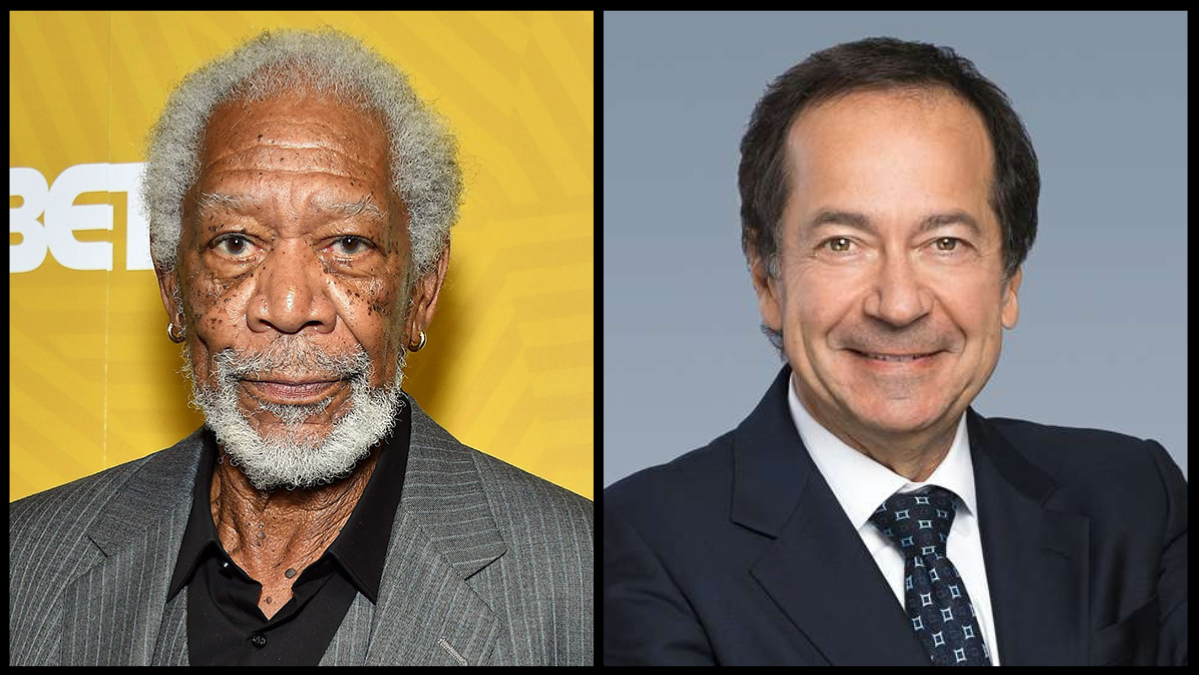
Morgan Freeman and John Paulson: Exploring Two Very Different Paths to Success
Morgan Freeman and John Paulson are two prominent American figures who have achieved remarkable success in very different fields. Freeman is celebrated worldwide for his distinguished acting career, unmistakable voice, and memorable performances in some of Hollywood’s most respected films. Paulson, meanwhile, is a billionaire investor known for his work in hedge fund management and his highly publicized financial bets during the 2007–2008 housing market crisis. Although their professional lives rarely overlap, both men offer fascinating examples of ambition, discipline, reputation, and the many ways people can build lasting influence.
Interest in Morgan Freeman and John Paulson often comes from a desire to understand who they are, how they accumulated their wealth, and what distinguishes their achievements. One represents decades of artistic accomplishment and cultural recognition, while the other represents financial strategy and the ability to identify opportunities in complex markets. Looking at their lives side by side offers a broader perspective on success, showing that wealth and influence can develop through entirely different combinations of talent, experience, and decision-making.
It is important, however, to distinguish between a comparison of these two public figures and a confirmed personal or professional relationship. Their prominence does not establish that they are business partners, close friends, or collaborators. Their individual achievements provide a much stronger basis for understanding why their names may attract interest together.
Who Are Morgan Freeman and John Paulson?
Morgan Freeman is an acclaimed American actor, producer, and narrator whose career spans several decades. Born on June 1, 1937, in Memphis, Tennessee, he became known for performances that combine quiet authority, emotional depth, and remarkable screen presence. His roles in films such as The Shawshank Redemption, Million Dollar Baby, Driving Miss Daisy, and Million Dollar Baby helped establish him as one of the most recognizable performers of his generation.
Freeman’s influence extends beyond acting. His distinctive voice has made him a sought-after narrator for documentaries, television productions, and other projects that benefit from a calm, authoritative delivery. His career illustrates how an individual can develop a recognizable professional identity through consistent work, versatility, and an ability to connect with audiences across generations.
John Paulson is an American investor and hedge fund manager best known for founding Paulson & Co. and making a major financial wager against the United States housing market before the global financial crisis. Born on December 14, 1955, in Queens, New York City, he built his reputation in investment management, where research, risk assessment, and market timing can have enormous financial consequences.
Paulson became especially famous after his firm’s investment strategy during the housing market collapse generated extraordinary returns for certain funds. His story is frequently discussed in financial journalism as an example of how identifying a weakness in a widely accepted market assumption can produce substantial gains. Unlike Freeman, whose achievements are measured largely through performances and cultural influence, Paulson’s public reputation is closely tied to investment results, wealth management, and philanthropy.
Morgan Freeman and John Paulson: Is There a Confirmed Connection?
The shared interest in Morgan Freeman and John Paulson does not, by itself, demonstrate a documented personal, business, or entertainment connection. They are prominent individuals from separate professional worlds, and their public profiles developed through different industries. Freeman became famous through film and television, while Paulson gained recognition in the financial sector.
A reliable account should separate verified information from assumptions. Public figures can appear together in online searches, social media discussions, celebrity wealth articles, or broader conversations about influential Americans without having a direct relationship. A shared mention is not evidence of a partnership, investment arrangement, friendship, or joint venture.
For readers researching these names, the most useful approach is to examine each person’s established career and public activities. Freeman’s filmography, awards, production work, and narration projects offer a substantial record of his professional life. Paulson’s hedge fund career, investment history, and charitable activities provide a comparable foundation for understanding his influence. Unless a credible source documents a specific connection, claims about their relationship should be treated cautiously.
This distinction matters for search engine optimization as well as factual accuracy. A well-researched article should address the search term directly while avoiding invented details designed merely to attract clicks. Readers are better served by a clear comparison of the two men than by a dramatic narrative built around an unverified association.
Morgan Freeman’s Journey From Early Life to Hollywood Recognition
Freeman’s rise to international recognition was gradual rather than immediate. After developing an interest in acting, he pursued performance opportunities in theatre and television before securing the major film roles that would define his career. His early professional experiences helped him develop the discipline, stage presence, and technical skills required for demanding roles.
His breakthrough came after years of work, illustrating an important feature of his career: recognition followed sustained effort. Freeman did not become a household name overnight. Instead, he built experience through a variety of performances, gradually earning opportunities to take on increasingly complex characters. This long development period is one reason his career is often viewed as an example of perseverance in the entertainment industry.
The 1987 film Street Smart brought him significant critical attention and earned him an Academy Award nomination for Best Supporting Actor. The performance helped introduce his talent to a wider film audience and contributed to the momentum that followed. His work in Driving Miss Daisy further strengthened his reputation, and the film became one of the defining projects of his early international success.
Freeman’s career subsequently expanded into a remarkable range of genres, including drama, action, mystery, and historical storytelling. His performances often communicate intelligence and emotional restraint, qualities that have helped him portray mentors, leaders, judges, and other characters whose authority depends more on presence than spectacle.
John Paulson’s Rise in Investment Management
Paulson’s career followed a different path, one rooted in finance and analytical decision-making. After studying business, he worked in investment-related positions before establishing Paulson & Co. in 1994. The firm developed strategies involving mergers, corporate events, and other investment opportunities where detailed analysis could help identify a potential difference between market prices and underlying value.
The hedge fund industry rewards investors who can evaluate complicated information, estimate risks, and make decisions under uncertainty. These tasks require more than confidence. They involve financial modelling, economic research, an understanding of market behaviour, and a willingness to challenge conventional assumptions when the evidence supports a different conclusion.
Paulson’s most famous investment period came before the 2008 financial crisis. His firm anticipated that problems in the American housing market and mortgage-related securities could create severe losses for investors who believed property prices would continue rising. Through strategies designed to benefit from falling values in these securities, the firm positioned itself to profit when the market deteriorated.
The results made Paulson one of the best-known investors of the crisis era. His success demonstrated the potential rewards of identifying systemic risks before they become widely recognized. At the same time, the episode illustrates how unusual financial gains can depend on timing, market conditions, and the ability to maintain a position while an investment thesis develops.
It would be misleading to suggest that every investment made by a successful hedge fund manager produces comparable returns. Financial markets change, strategies can stop working, and even well-researched decisions can result in losses. Paulson’s career is therefore best understood through both his most famous success and the broader realities of managing investment capital.
Comparing Their Careers and Public Influence
The clearest comparison between Freeman and Paulson is the contrast between the industries in which they built their reputations. Freeman creates value through performances, storytelling, and artistic collaboration. Paulson has created value through investment decisions and the management of financial assets. Their work requires different technical skills, but both careers demonstrate the importance of experience and judgment.
| Category | Morgan Freeman | John Paulson |
|---|---|---|
| Main profession | Actor, producer, narrator | Investor and hedge fund manager |
| Primary industry | Film and entertainment | Finance and investment management |
| Best-known achievement | Acclaimed film performances and narration | Profiting from positions against housing-related securities before the 2008 crisis |
| Career foundation | Acting experience, versatility, and storytelling | Financial analysis, research, and investment strategy |
| Public recognition | Films, awards, and distinctive voice | Investment performance and financial wealth |
| Additional influence | Entertainment and cultural projects | Philanthropy and charitable giving |
| Main measure of professional success | Artistic achievement and audience impact | Investment outcomes and capital management |
The table highlights the different ways achievement can be measured. In entertainment, professional success may depend on critical reception, audience appreciation, awards, and the ability to sustain a career over decades. In finance, investors are often judged by returns, risk management, and their ability to preserve or grow capital through changing economic conditions.
Nevertheless, neither profession can be reduced to a single number. An actor’s value cannot be fully measured by box-office revenue, just as an investor’s long-term ability cannot be assessed from one exceptional trade. Reputation, professional judgment, consistency, and broader contributions all help explain why certain individuals remain influential.
Morgan Freeman’s Net Worth and Sources of Income
Morgan Freeman’s wealth comes from a long career in entertainment. His income sources have included film salaries, television appearances, producing work, narration, and other professional projects. As his reputation grew, he gained access to major productions and roles that could command substantial compensation.
Narration has been an especially recognizable part of Freeman’s professional identity. His voice has featured in documentaries, television programmes, advertisements, and films, making him valuable for projects that require a distinctive and reassuring narrator. However, the precise compensation for individual narration assignments is not consistently available in the public record.
Film salaries can also vary substantially depending on a project’s budget, the actor’s contractual terms, the size of the role, and any arrangements involving bonuses or other payments. An established performer may receive compensation that reflects decades of professional experience, but that does not mean every film offers the same financial return.
Online estimates of Freeman’s net worth frequently circulate, yet they should not be mistaken for audited financial statements. Net worth depends on assets, liabilities, investments, property, taxes, and other private financial details that are not necessarily disclosed. A responsible article can explain the sources of his wealth without presenting an unverified figure as an established fact.
His long career demonstrates how professional longevity can contribute to financial stability. Rather than depending on a single project, Freeman has worked across multiple formats and genres, allowing his skills and reputation to remain commercially relevant over time.
John Paulson’s Net Worth and Investment Wealth
Paulson’s wealth is associated primarily with hedge fund management and investments. His financial reputation rose dramatically after his firm’s positions against mortgage-related securities produced extraordinary gains during the housing crisis. The episode became a landmark example in discussions of financial speculation and the risks hidden within apparently stable markets.
Unlike an actor’s earnings from individual projects, an investment manager’s wealth can depend on several interconnected factors. These may include ownership in an investment management firm, fees earned from managing assets, investment returns on personal capital, and other financial holdings. The relative importance of these sources can change over time.
The famous housing market trade also illustrates the difference between a fund’s reported profit and an individual’s personal wealth. A fund may manage money belonging to outside investors, and its gains cannot automatically be treated as the manager’s personal income. Fees, contractual arrangements, expenses, and the distribution of returns all affect the final result.
Paulson’s wealth has attracted significant public attention, but exact personal financial details remain subject to the limitations of publicly available information. Billionaire rankings and financial publications may publish estimates, yet such figures can change as asset values, investments, and market conditions shift.
The most useful conclusion is that Paulson built considerable wealth through investment management and financial decisions rather than through a conventional salary. His career also demonstrates that exceptional investment returns can bring significant recognition, while leaving questions about risk, market consequences, and long-term performance open to debate.
Different Approaches to Building Long-Term Success
Freeman’s career suggests that lasting success often depends on developing a skill over many years. Acting demands emotional intelligence, timing, collaboration, memorisation, and an ability to interpret human behaviour. A successful performance requires more than delivering dialogue; it depends on making a character believable within the larger story.
Paulson’s career demonstrates the value of research and independent thinking. Investment decisions can require the ability to interpret financial reports, assess economic trends, evaluate complex products, and identify risks that other market participants underestimate. A successful investment thesis must also survive the uncertainty between making a decision and seeing its outcome.
Both men show the importance of reputation, although the way reputation operates differs between their industries. For Freeman, trust from directors, producers, audiences, and collaborators can lead to further opportunities. For Paulson, confidence from investors and business partners can influence the capital available to manage and the opportunities a firm can pursue.
Their careers also reveal that success rarely follows a perfectly predictable path. Freeman worked for years before achieving some of his best-known roles, while Paulson’s major housing market investment required taking a position that was far from universally accepted at the time. In each case, professional achievement emerged from a combination of preparation, opportunity, and decision-making.
There is no single formula that guarantees comparable results. What can be learned from their experiences is that expertise develops through sustained engagement with a field, and that long-term credibility is built through the accumulation of decisions and achievements rather than through one public moment.
Philanthropy and Contributions Beyond Their Main Careers
Public influence can extend beyond professional accomplishments. Freeman has been associated with charitable initiatives and community-focused projects, including efforts connected with education and the arts. His public profile has also provided opportunities to support causes that benefit from greater visibility.
One important distinction is that celebrity involvement in a cause does not always mean the individual has established or personally funded a major charitable institution. Donations, public advocacy, participation in fundraising, and direct organisational leadership are different forms of contribution. Specific claims about funding or charitable commitments should therefore be supported by reliable reporting.
Paulson has also become known for philanthropy, particularly through large charitable commitments associated with education, healthcare, and other public-interest causes. His financial resources have allowed him to support projects that may require significant long-term funding. Such contributions provide another dimension to the public understanding of his career beyond investment returns.
Philanthropy can create meaningful opportunities, but its effects depend on how donations are managed and how projects are implemented. A large financial commitment may support research, improve facilities, expand educational access, or strengthen an institution’s ability to serve its community. The actual impact depends on the goals, oversight, and effectiveness of the organisation receiving the support.
The charitable activities associated with both men demonstrate that public figures can influence society through more than their principal professions. Whether through financial support, cultural work, or participation in public initiatives, contributions beyond a primary career can form an important part of a person’s legacy.
Public Perception, Reputation, and Media Attention
Freeman’s public image is strongly associated with wisdom, calm authority, and a distinctive screen presence. These associations reflect the kinds of roles he has played and the way audiences have responded to his voice and performances. Over time, his name has become familiar even to people who do not follow Hollywood closely.
However, a public image is not the same as a complete biography. Film roles are fictional, and the characteristics audiences associate with a performer should not automatically be treated as evidence about that person’s private personality. Understanding Freeman requires distinguishing his on-screen work from his life outside the entertainment industry.
Paulson’s public image is shaped by a different set of considerations. Financial reporting often focuses on major trades, billionaire wealth, hedge fund performance, and the influence of investors on markets. His success during the housing crisis made him a prominent figure in debates about whether sophisticated investors can identify systemic problems before they become obvious to the wider market.
Financial success can attract both admiration and criticism. Some observers regard successful investors as skilled analysts who identify risks others overlook, while others question the wider economic consequences of strategies that profit during periods of financial distress. These competing views form part of the public debate surrounding the hedge fund industry.
The contrast between their reputations illustrates how the media frames success differently across professions. Entertainment coverage often emphasises performances and personal stories, whereas financial journalism tends to focus on money, strategy, economic outcomes, and risk. Neither approach captures every dimension of an individual, but together they help explain why different forms of achievement attract different kinds of attention.
Lessons From Their Professional Journeys
One lesson from Freeman’s career is the importance of patience. Recognition in a competitive industry can take years, and early success does not always predict long-term achievement. Building a strong professional foundation requires practice, resilience, and the ability to keep improving even when opportunities are limited.
Paulson’s career offers a lesson in questioning prevailing assumptions. Markets can become vulnerable when large numbers of participants accept the same expectations without adequately considering alternative outcomes. Careful research and an understanding of risk can help identify weaknesses, although no strategy removes uncertainty or guarantees a profit.
Both careers also demonstrate that specialisation can create an advantage. Freeman developed expertise in performance and narration, while Paulson concentrated on investment management. Deep knowledge of a field can help people recognise opportunities that might be less visible to those with only a general understanding of the subject.
Another lesson concerns the relationship between achievement and reputation. Strong professional work can create opportunities, but maintaining credibility requires more than one successful performance or investment. Long-term influence is built through a broader record of decisions, relationships, and contributions.
Finally, their stories show why success should be understood in context. Financial wealth is one measure of achievement, but it does not capture artistic impact, personal fulfilment, public service, or the value of a cultural contribution. A balanced assessment considers both measurable outcomes and the less tangible ways individuals affect the world around them.
Quotes and Ideas That Reflect Their Careers
A meaningful comparison does not require inventing quotations or attributing generic motivational statements to either man. Freeman’s filmography, for example, contains many memorable lines spoken by characters he has portrayed. Those lines belong to particular stories and should not automatically be presented as the actor’s personal philosophy.
Similarly, Paulson’s investment career is better understood through documented decisions and reported financial outcomes than through unsourced quotations about wealth or success. His widely discussed housing market strategy provides a concrete illustration of the importance of questioning market assumptions and evaluating downside risk.
A useful principle that emerges from comparing their careers is this: lasting influence grows when professional skill is supported by preparation, sound judgment, and a willingness to learn. This is a general interpretation of their different career paths, not a quotation attributed to either individual.
Freeman’s work demonstrates how storytelling can connect people with experiences beyond their own lives. Paulson’s career demonstrates how analytical thinking can uncover opportunities or risks concealed by prevailing expectations. Both examples encourage a more thoughtful understanding of expertise, although their methods and professional responsibilities are fundamentally different.
The most credible way to discuss public figures is to connect lessons to verifiable events rather than to manufacture quotations that sound inspirational. Accuracy strengthens an article’s value and allows readers to draw their own conclusions from the evidence.
Understanding Their Broader Legacy
The long-term legacy of Morgan Freeman is closely connected to the stories he has helped bring to life. His performances have introduced audiences to complex characters, explored difficult human experiences, and contributed to films that continue to attract viewers years after their original release. His distinctive narration has also become an important part of his professional identity, helping establish a connection between his voice and thoughtful storytelling.
Paulson’s legacy is more closely associated with financial history, particularly the housing market crisis and the role of hedge funds in identifying economic vulnerabilities. His investment decisions became a prominent case study in financial discussions about mortgage-backed securities, market confidence, and the consequences of excessive risk-taking. His charitable work adds another dimension to his public profile, extending his influence beyond investment management.
When comparing Morgan Freeman and John Paulson, it is useful to recognise that legacy develops differently across professions. An actor may remain influential because performances continue to resonate with new generations, while an investor may be remembered for a strategy that changed how people understand a particular economic event. Both forms of influence can endure, even when the individuals operate in entirely different environments.
Their stories also demonstrate why a public figure should be evaluated through more than wealth or fame alone. Professional achievements, contributions to society, the durability of a person’s work, and the wider consequences of their decisions all matter when assessing long-term significance.
Frequently Asked Questions
Who are Morgan Freeman and John Paulson?
Morgan Freeman is an American actor, producer, and narrator celebrated for films including The Shawshank Redemption and Million Dollar Baby. John Paulson is an American investor and hedge fund manager known for founding Paulson & Co. and profiting from investments that anticipated the collapse of the United States housing market before the 2008 financial crisis.
Are Morgan Freeman and John Paulson business partners?
There is no widely established public evidence confirming that they are business partners. They are best known for their separate careers in entertainment and investment management. Any claim of a joint business venture should be supported by credible reporting or an official announcement.
What is Morgan Freeman best known for?
Freeman is best known for his acclaimed acting performances, distinctive narration, and long career in Hollywood. His roles in Driving Miss Daisy, The Shawshank Redemption, and Million Dollar Baby helped establish his international reputation. He won the Academy Award for Best Supporting Actor for Million Dollar Baby in 2005.
Why is John Paulson famous?
Paulson became particularly famous for his firm’s successful investment positions against mortgage-related securities before the 2008 financial crisis. The strategy generated extraordinary profits for certain funds and made him a major figure in discussions about hedge funds, financial markets, and the housing collapse.
Who is wealthier, Morgan Freeman or John Paulson?
John Paulson is generally reported to have substantially greater personal wealth than Morgan Freeman. His fortune is associated with investment management and financial holdings, while Freeman’s wealth comes primarily from acting, narration, producing, and related entertainment work. Exact net worth figures are estimates because neither person’s complete financial position is publicly available.
Do Morgan Freeman and John Paulson work in the same industry?
No. Freeman works primarily in film, television, and narration, whereas Paulson is known for investment management and financial markets. Their careers involve different skills, business models, and measures of success, which makes their comparison interesting without implying a direct professional relationship.
What can people learn from Morgan Freeman and John Paulson?
Their careers highlight different approaches to professional achievement. Freeman’s journey demonstrates the value of persistence, creative development, and long-term experience. Paulson’s investment history illustrates the importance of research, independent analysis, and risk assessment. Both examples show that sustained expertise can create opportunities, although neither career provides a guaranteed formula for success.
Conclusion
Morgan Freeman and John Paulson represent two distinct paths to achievement in American public life. Freeman built an enduring reputation through acting, narration, and contributions to entertainment, while Paulson became known for investment management, significant financial success, and philanthropy. Their careers demonstrate how talent, preparation, and professional judgment can lead to influence in very different industries.
Although interest in Morgan Freeman and John Paulson may encourage comparisons of their wealth, backgrounds, and public profiles, there is no need to assume a personal or business relationship without reliable evidence. Their individual accomplishments offer more than enough material for a meaningful comparison.
Ultimately, their stories highlight the many forms success can take. Cultural influence, financial achievement, professional longevity, and charitable contributions all provide different ways to evaluate a person’s impact. Understanding these distinctions offers a more balanced picture of two prominent Americans whose careers developed along separate but equally interesting paths.
Read also Harry Styles and Olivia Wilde: Their Relationship, Romance, and Breakup Explained