Judi Dench and Glenn Close: Careers, Achievements, and Lasting Influence
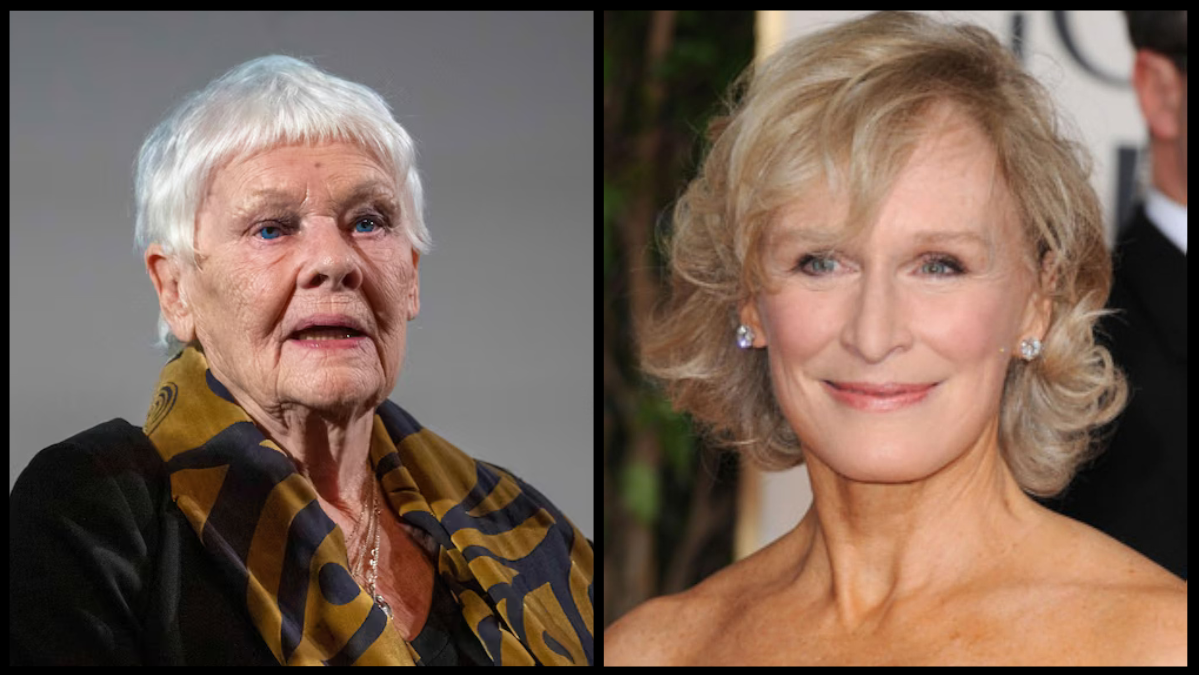
Judi Dench and Glenn Close are two of the most respected actresses in the history of film, television, and theatre. Both have built extraordinary careers through their powerful performances, impressive versatility, and commitment to bringing complex characters to life. Although they come from different countries and have developed distinctive acting styles, their professional journeys share several important qualities: artistic ambition, dedication to theatre, and an ability to make audiences feel deeply connected to the characters they portray.
Dame Judi Dench is a celebrated British actress known for her Shakespearean performances, commanding screen presence, and memorable roles in films such as Shakespeare in Love, Philomena, and the James Bond franchise. Glenn Close, an acclaimed American actress, has earned recognition for her emotionally intense performances in Fatal Attraction, Dangerous Liaisons, Albert Nobbs, and The Wife. Both performers have demonstrated that a successful acting career can extend across generations and encompass a remarkable variety of roles.
The interest surrounding Judi Dench and Glenn Close comes from more than their awards or famous film appearances. Their careers illustrate two different but equally compelling approaches to acting. One is closely associated with the traditions of British theatre, while the other is celebrated for transforming psychologically complicated characters into unforgettable screen performances. Together, their achievements demonstrate the enduring value of talent, discipline, and artistic courage.
Who Are Judi Dench and Glenn Close?
Judi Dench was born on December 9, 1934, in York, England. She developed an interest in acting at an early age and became particularly well known for her work with the Royal Shakespeare Company and the British theatre world. Her ability to move naturally between classical drama, contemporary stories, comedy, and major Hollywood productions established her as one of Britain’s most accomplished performers.
Over several decades, Dench became a familiar face to international audiences. Her portrayal of Queen Elizabeth I in Shakespeare in Love earned her an Academy Award, while her performance as M in the James Bond films introduced her to a much wider audience. Despite her success in cinema, theatre has remained an important part of her artistic identity.
Glenn Close was born on March 19, 1947, in Greenwich, Connecticut, United States. She initially pursued theatre before achieving significant success in film during the early 1980s. Her breakthrough performances revealed an actress capable of combining intelligence, emotional intensity, and remarkable control. She quickly became known for characters whose inner conflicts could be as compelling as their outward actions.
Close has worked extensively in theatre, cinema, and television. Her performances in The Big Chill, Fatal Attraction, Dangerous Liaisons, and The Wife demonstrate her ability to portray characters who are powerful, vulnerable, unpredictable, and morally complicated. Her career has earned her widespread critical recognition and a lasting place among the leading performers of her generation.
How Their Acting Careers Began
Judi Dench’s early career was shaped by classical theatre. She trained at the Central School of Speech and Drama in London before making her professional stage debut in the 1950s. Her early work with Shakespearean productions helped establish the foundation for a career built on disciplined character interpretation, precise language, and a deep understanding of dramatic structure.
Theatre provided Dench with opportunities to explore a broad range of personalities and emotional experiences. Shakespeare’s plays, in particular, require actors to balance poetic language with believable human behavior. Her success in this demanding environment helped her develop the expressive skills that later became essential to her screen performances. Rather than abandoning the stage after finding success in film, she continued returning to theatre throughout her career.
Glenn Close followed a different route to international recognition, although theatre was equally important to her development. She studied at the College of William & Mary and became involved in professional stage productions before making her film debut in The World According to Garp in 1982. Her performance in the film attracted attention and helped launch a remarkably successful screen career.
Close’s early theatrical experience gave her a strong foundation in character preparation and emotional storytelling. She approached acting as a craft that demanded careful observation, sustained concentration, and a willingness to explore uncomfortable emotions. These qualities became particularly visible in the complex dramatic roles that followed, allowing her to establish a distinctive identity in American cinema.
Comparing Their Acting Styles and Strengths
One of the most interesting aspects of Judi Dench and Glenn Close is how differently they can approach dramatic material while achieving similarly powerful results. Dench often communicates emotion through precision, subtle changes in expression, and a remarkable command of dialogue. Her performances can convey authority without excessive movement and tenderness without sentimental exaggeration.
Her theatrical background is especially visible in roles that require careful control of language. Dench can make a short line of dialogue feel significant through timing, vocal emphasis, and facial expression. Even in large commercial productions, she often brings a sense of history and personal experience to her characters. This ability helps her create memorable performances without needing to dominate every scene.
Close is frequently associated with psychological complexity and emotional transformation. She has a particular talent for portraying people whose public identities conflict with their private feelings. Her characters may appear confident or intimidating while concealing fear, disappointment, insecurity, or desperation. This contrast gives her performances an intensity that can make even morally ambiguous characters fascinating to watch.
Neither actress can be reduced to a single style. Dench has demonstrated considerable comic ability, while Close has delivered nuanced performances in romantic drama, comedy, fantasy, and musical theatre. Their greatest shared strength is versatility: both understand how to adapt their technique to the needs of a particular story rather than forcing every character into the same dramatic pattern.
Judi Dench’s Most Memorable Film and Television Roles
Judi Dench’s screen career includes performances across historical drama, contemporary storytelling, comedy, and major franchises. One of her best-known roles is Queen Elizabeth I in Shakespeare in Love (1998). Although her screen time is relatively brief, her commanding portrayal gives the monarch extraordinary authority. The performance earned Dench the Academy Award for Best Supporting Actress and became one of the defining achievements of her film career.
Another important role came through the James Bond franchise. Dench first appeared as M in GoldenEye (1995), becoming the first woman to portray Bond’s superior in the official film series. Her interpretation brought intelligence, authority, and dry humor to the character. She continued playing M across several films, including Casino Royale and Skyfall, helping redefine the role for a new generation of audiences.
Dench also received acclaim for more intimate dramatic performances. In Philomena (2013), she played an Irish woman searching for the son taken from her decades earlier. The film allowed her to combine humor, grief, resilience, and quiet determination. Her performance earned an Academy Award nomination for Best Actress and demonstrated her ability to carry a deeply emotional story with restraint.
Her other notable films include Mrs Brown, Iris, Notes on a Scandal, Chocolat, and Victoria & Abdul. Across these productions, she has portrayed monarchs, writers, ordinary women, and complicated figures navigating personal or political challenges. Her ability to find humanity in very different characters remains one of her strongest qualities.
Glenn Close’s Most Acclaimed Film Performances
Glenn Close’s filmography is distinguished by roles that demand emotional precision and a willingness to confront difficult subject matter. Her performance in Fatal Attraction (1987) remains one of her most recognizable. Playing Alex Forrest, a woman involved in a destructive relationship, Close created a character whose behavior becomes increasingly alarming while remaining connected to recognizable human vulnerabilities.
The film became a major cultural phenomenon, and Close’s performance attracted considerable attention. Although Alex is often discussed through the thriller’s suspenseful events, the role also demonstrates Close’s skill at communicating emotional instability, anger, longing, and desperation. Her work helped establish her reputation as an actress capable of making psychologically challenging characters unforgettable.
Close delivered another acclaimed performance in Dangerous Liaisons (1988), portraying the calculating Marquise de Merteuil. The character relies on intelligence, social influence, and emotional manipulation to maintain power within a restrictive society. Close balanced elegance with menace, creating a performance that revealed how social expectations can turn personal relationships into struggles for control.
Her later work continued to demonstrate her range. In Albert Nobbs (2011), she portrayed a woman living under a male identity in nineteenth-century Ireland, earning an Academy Award nomination for Best Actress. In The Wife (2017), she played Joan Castleman, a woman confronting decades of compromise and resentment within her marriage. The latter performance earned her a Golden Globe Award and widespread critical praise.
Close has also appeared in films such as The Big Chill, Reversal of Fortune, Air Force One, and Hillbilly Elegy. Her television work, including Damages, has further demonstrated her ability to sustain complex characters across extended narratives.
Awards and Major Career Achievements
Both actresses have received extensive recognition for their contributions to entertainment. Their awards reflect not only individual performances but also the respect they have earned across film, theatre, and television. Each has been nominated for major industry honors many times, illustrating the consistency of their work over several decades.
Dench won the Academy Award for Best Supporting Actress for Shakespeare in Love. She has also received numerous BAFTA Awards and other major honors. In 1988, she was appointed Dame Commander of the Order of the British Empire for her services to drama, reflecting her importance to British cultural life.
Close has received multiple Academy Award nominations across her career, including recognition for The World According to Garp, The Big Chill, The Natural, Fatal Attraction, Dangerous Liaisons, Albert Nobbs, and The Wife. She has also won major television and theatre awards, including Emmy, Tony, and Golden Globe honors.
The following table provides a useful overview of their careers and achievements.
| Category | Judi Dench | Glenn Close |
|---|---|---|
| Birthplace | York, England | Greenwich, Connecticut, USA |
| Birth date | December 9, 1934 | March 19, 1947 |
| Primary industries | Film, theatre, television | Film, theatre, television |
| Famous film roles | Shakespeare in Love, Philomena | Fatal Attraction, Dangerous Liaisons, The Wife |
| Recognized franchise role | M in the James Bond films | Patty Hewes in Damages is a major television role |
| Academy Award win | Best Supporting Actress for Shakespeare in Love | No competitive Academy Award win as of October 2026 |
| Major stage recognition | Olivier Awards and other theatre honors | Tony Awards for stage performances |
| Acting strengths | Commanding presence, precision, versatility | Psychological depth, intensity, character transformation |
Their award histories also reveal an important distinction. Dench won a competitive Oscar, while Close has received numerous competitive nominations without winning an Academy Award. Close’s lack of a competitive Oscar win has frequently attracted public attention, but it does not diminish the breadth of her achievements or the influence of her performances.
Their Contributions to Theatre
Theatre has played a central role in both careers, providing a foundation for their screen work and a space in which they could continue developing as performers. For Dench, Shakespearean drama has been particularly important. Her work with the Royal Shakespeare Company helped establish her reputation as an actress capable of handling demanding classical roles while keeping their emotional meaning accessible to modern audiences.
Dench has performed in productions including Macbeth, Hamlet, and The Winter’s Tale, among other major works. Her stage career demonstrates that classical acting does not have to feel distant or overly formal. Through careful attention to character relationships and human motivation, she has helped audiences connect with stories written centuries ago.
Close also developed a substantial stage career, performing in Broadway productions before achieving widespread film recognition. Her theatre credits include Barnum, The Real Thing, and Sunset Boulevard. Her portrayal of Norma Desmond in Sunset Boulevard earned her a Tony Award and showcased her ability to combine theatrical grandeur with deep emotional vulnerability.
The two actresses share a respect for the discipline of live performance. Theatre requires actors to sustain a character without the advantages of repeated takes or editorial adjustments. It also demands a strong understanding of rhythm, voice, movement, and audience response. Their success on stage has strengthened their reputations as performers whose abilities extend well beyond the screen.
Judi Dench and Glenn Close: Similarities and Differences
Although Judi Dench and Glenn Close have developed different professional identities, their careers share several important themes. Both entered the entertainment industry through theatre, developed strong reputations through challenging roles, and continued working across multiple formats. Neither has depended exclusively on one genre or a single famous character.
Their careers also demonstrate the value of longevity. Instead of limiting themselves to roles suited to a particular age or public image, both actresses have continued exploring characters at different stages of life. They have played powerful leaders, complicated family members, vulnerable individuals, and people struggling with difficult moral choices.
Their differences are equally significant. Dench’s work is often associated with British cultural traditions, Shakespearean performance, and the ability to communicate authority through restrained expression. Close, meanwhile, is frequently celebrated for her portrayals of emotionally intense women whose relationships and private conflicts drive the story.
These distinctions should not be treated as strict boundaries. Dench can be fierce and unpredictable, while Close can be subtle and understated. The real comparison lies in how each actress uses her individual strengths to serve a character. Both show that memorable acting depends on observation, interpretation, and the ability to make fictional lives feel authentic.
Public Recognition and Cultural Influence
Judi Dench has become an important figure in British popular culture. Her performances in major productions have made her recognizable to audiences who may not regularly watch theatre or historical drama. Her role as M in the James Bond series, in particular, helped bridge the gap between classical acting traditions and contemporary blockbuster entertainment.
Dench’s career has also contributed to a broader understanding of how older women can remain central to film narratives. She has frequently played characters with authority, independence, humor, and emotional complexity. These roles challenge the idea that actresses must become less visible as they grow older and demonstrate that experience can deepen a performance.
Glenn Close has had a similarly lasting cultural impact, particularly through roles that challenge conventional ideas about women, ambition, marriage, and power. Her performances often encourage audiences to reconsider characters who might otherwise be dismissed as villains or difficult personalities. By revealing their fears and contradictions, she makes their stories more psychologically interesting.
Close’s advocacy for greater understanding of mental health, including her public involvement in efforts to reduce stigma, has also contributed to her broader public profile. Her professional achievements and personal interests demonstrate that an actor’s influence can extend beyond individual films into conversations about social attitudes and human experience.
Their Influence on Future Generations of Actors
The careers of Judi Dench and Glenn Close offer valuable lessons for aspiring performers. Their success shows that technical skill and emotional honesty are not competing qualities. A strong performance requires both the discipline to understand the script and the imagination to explore what a character feels but does not say.
Dench’s career highlights the importance of language, listening, and stage experience. Her work demonstrates that actors can learn to create powerful moments through small choices, including a pause, a change in tone, or a subtle reaction to another character. Such techniques can make dialogue feel natural while preserving its dramatic significance.
Close’s performances illustrate the importance of psychological preparation. Her characters often have conflicting motivations, and their behavior makes sense only when viewers recognize the emotions beneath the surface. For young actors, this approach emphasizes the value of studying character history, relationships, personal goals, and emotional contradictions.
Both women also demonstrate the importance of resilience. An acting career can involve uncertainty, rejection, changing industry expectations, and periods when suitable roles are difficult to find. Their long professional journeys show that continued learning and a willingness to embrace challenging work can help sustain a career across decades.
Memorable Quotes and Acting Philosophy
The artistic approaches associated with Judi Dench and Glenn Close are best understood through their performances and their public reflections on acting. Both have spoken over the years about the importance of preparation, collaboration, and remaining open to the demands of a role. Their careers suggest that an actor must be willing to discover something new in a character rather than simply repeat a familiar technique.
Rather than attributing invented quotations to either actress, it is more useful to consider the ideas their work consistently communicates. Dench’s performances often express the value of clarity: every line, gesture, and reaction can contribute to a character’s meaning. Her approach reminds audiences that strong acting does not always require dramatic displays of emotion.
Close’s work offers a complementary lesson about complexity. Her most memorable characters are rarely defined by one emotion or motivation. They may be loving and manipulative, confident and frightened, or determined and deeply insecure. This layered approach reflects a fundamental principle of dramatic storytelling: people are rarely as simple as they first appear.
Their careers also reinforce a useful observation about artistic excellence: lasting performances emerge when technical ability serves a believable human experience. Neither actress relies solely on celebrity or appearance to sustain audience interest. Their reputations have grown through the quality of their work and the distinct personalities they bring to each production.
Why Audiences Continue to Admire Both Actresses
Audiences continue to appreciate Dench because she combines authority with warmth. Even when playing a monarch, a demanding supervisor, or a morally complicated character, she often finds an identifiable human quality beneath the role. Her performances can be witty, moving, intimidating, or tender, sometimes within a single scene.
Her work also benefits from a distinctive screen presence. Dench can make a supporting role feel essential to the story, as demonstrated by her performance in Shakespeare in Love. She has shown that a character does not need extensive screen time to leave a lasting impression. What matters is the precision and conviction with which the role is performed.
Close attracts admiration for a different but equally compelling reason. She is willing to explore characters who are uncomfortable to watch, emotionally exposed, or difficult to understand. Rather than making every character immediately likable, she invites audiences to consider what motivates their actions and how their experiences shape their decisions.
For many viewers, these qualities make her performances rewarding long after a film ends. Characters such as Alex Forrest and Joan Castleman generate discussion because they resist easy judgments. Close’s ability to reveal emotional contradictions helps ensure that her work remains relevant to audiences interested in complex storytelling.
The Lasting Legacy of Their Careers
The legacies of Judi Dench and Glenn Close extend beyond award ceremonies, box-office success, and famous film scenes. Both have helped demonstrate that acting is a profession requiring lifelong curiosity. Their careers show how performers can continue developing their craft while taking on new challenges and working with different generations of directors, writers, and fellow actors.
Dench’s influence is closely connected to her contributions to British theatre and cinema. She has brought classical drama to international audiences while maintaining a strong presence in popular entertainment. Her performances demonstrate how tradition and modern storytelling can complement one another rather than compete.
Close’s legacy rests partly on her willingness to embrace roles that demand emotional risk. Her work has helped expand the range of women portrayed in mainstream film and television, particularly characters whose power, ambition, and vulnerability cannot be easily separated. Her achievements across stage and screen illustrate the rewards of taking artistic risks.
Ultimately, their careers represent different expressions of the same commitment to performance. Dench often captivates through precision and presence, while Close frequently engages audiences through psychological intensity and emotional transformation. Both have created performances that continue to be studied, discussed, and enjoyed by audiences around the world.
Frequently Asked Questions
Are Judi Dench and Glenn Close friends?
There is no widely established public record that identifies Judi Dench and Glenn Close as close personal friends. Both are prominent actresses with overlapping interests in theatre and film, but their professional achievements should not be taken as evidence of a private friendship.
Have Judi Dench and Glenn Close appeared in a film together?
They are not widely known for sharing a major film credit. Their careers have developed largely through separate productions, with Dench becoming particularly associated with British theatre and the James Bond franchise, while Close has become known for psychologically complex film roles and acclaimed television performances.
Who has won more Academy Awards, Judi Dench or Glenn Close?
Judi Dench has won one competitive Academy Award, receiving Best Supporting Actress for Shakespeare in Love. Glenn Close has received multiple competitive Oscar nominations but has not won a competitive Academy Award as of October 2026.
What are Judi Dench’s most famous films?
Some of Dench’s best-known films include Shakespeare in Love, Philomena, Mrs Brown, Iris, Notes on a Scandal, Chocolat, and several James Bond films. Her performances demonstrate her versatility across historical drama, comedy, contemporary stories, and action-oriented productions.
What are Glenn Close’s most famous films?
Glenn Close is widely recognized for Fatal Attraction, Dangerous Liaisons, The Big Chill, Albert Nobbs, and The Wife. She has also earned considerable acclaim for television work, particularly her performance in the legal drama Damages.
What makes Judi Dench and Glenn Close important to acting?
Their careers demonstrate the importance of versatility, preparation, emotional authenticity, and sustained artistic development. Dench is celebrated for her command of language and remarkable stage presence, while Close is admired for her psychological depth and complex character portrayals. Both have influenced how audiences and fellow performers understand the possibilities of acting.
Are Judi Dench and Glenn Close still influential in the entertainment industry?
Yes. Their performances, awards, and contributions to theatre and screen continue to influence discussions about acting and character development. Their careers also demonstrate that performers can remain culturally significant through the quality and depth of their work across different stages of life.
Conclusion
Judi Dench and Glenn Close represent two extraordinary careers built on talent, dedication, and a willingness to explore complex human experiences. Although their backgrounds and acting styles differ, both have earned lasting respect through memorable performances across theatre, film, and television. Dench’s command of language, understated authority, and contributions to British drama distinguish her career, while Close’s emotional intensity and psychologically rich characters have made her one of America’s most acclaimed actresses.
Their achievements also offer a broader lesson about artistic success. Awards and public recognition matter, but a lasting legacy depends on the ability to create characters who remain meaningful to audiences long after a production ends. Through their diverse roles, professional resilience, and commitment to their craft, these two actresses have demonstrated the enduring power of thoughtful, authentic performance. Their work continues to enrich entertainment and inspire performers who hope to build careers defined by substance, versatility, and artistic integrity.
Read also Morgan Freeman and John Paulson: Exploring Two Very Different Paths to Success