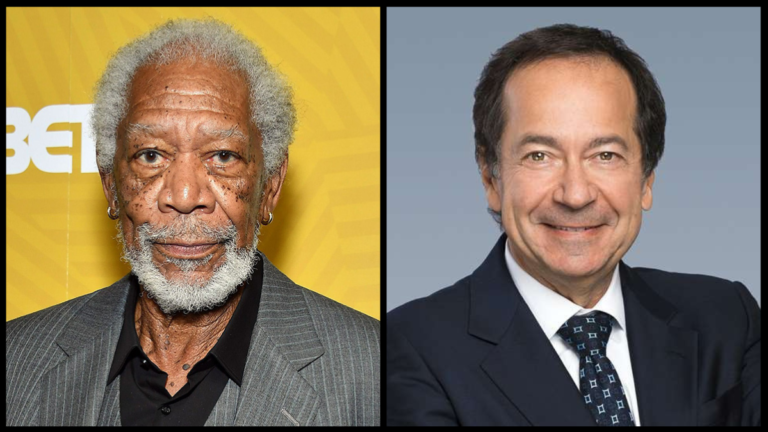
Hans Vestberg and Mario Gabelli: Careers, Business Connections, Achievements, and Leadership
The business world brings together individuals with different skills, professional backgrounds, and approaches to success. Some build large companies through technology and innovation, while others create their influence through financial research, investment strategies, and long-term market analysis. Hans Vestberg and Mario Gabelli represent two interesting examples of these different paths. Although their careers have developed in separate industries, both have become recognised figures in the international business community.
Hans Vestberg is best known for his leadership in telecommunications, particularly his work with Ericsson and Verizon Communications. His career has involved major developments in mobile networks, digital infrastructure, and 5G technology. Mario Gabelli, on the other hand, is an established American investor and the founder of GAMCO Investors, a financial services company known for its research-driven investment philosophy.
The two business figures are sometimes discussed together because their professional interests overlap around corporate performance, telecommunications, and financial markets. However, it is important to distinguish between an industry connection and a confirmed personal or professional relationship. Their careers provide an opportunity to understand how corporate leadership and investment management influence modern business.
This article explores their backgrounds, professional achievements, leadership philosophies, and the reasons their names attract attention together. It also examines what can be learned from their different approaches to business success.
Who Are Hans Vestberg and Mario Gabelli?
Hans Vestberg is a Swedish business executive who built an international reputation through his work in telecommunications. He spent much of his early professional career at Ericsson, one of the world’s major telecommunications equipment and technology companies. His experience eventually led him to senior leadership positions, including the role of chief executive officer. He later joined Verizon in the United States, where he became CEO in 2018 and chairman in 2019.
Mario Gabelli is an American investor, entrepreneur, and financial industry leader. He founded GAMCO Investors in 1977 and became widely associated with value investing. His investment philosophy focuses on identifying companies whose underlying business value may not be fully reflected in their market prices. Over several decades, he developed a reputation for detailed research, financial analysis, and an interest in businesses with long-term growth potential.
Although their professional responsibilities are different, both men have influenced important areas of the global economy. Vestberg’s career demonstrates how technology executives manage complex infrastructure and corporate transformation. Gabelli’s experience illustrates how investors evaluate companies, assess opportunities, and make decisions in changing financial markets.
Understanding their individual achievements makes it easier to see why these two names sometimes appear together in business discussions.
Are Hans Vestberg and Mario Gabelli Connected?
One of the main reasons people search for Hans Vestberg and Mario Gabelli together is curiosity about whether they have a direct professional or personal relationship. Both operate within the broader corporate and financial environment, and telecommunications companies are naturally relevant to investment managers who study publicly traded businesses.
However, there is no established public evidence confirming that they are business partners, relatives, co-founders, or close personal associates. Their professional biographies describe separate career paths. Vestberg’s background is centred on telecommunications management, while Gabelli’s reputation comes from investment research and financial services.
Their connection is better understood through the wider business environment. Telecommunications companies require enormous investments in equipment, infrastructure, spectrum, software, and network development. Investors regularly analyse these businesses to understand their financial health, competitive advantages, and future prospects.
This creates an indirect professional overlap between telecommunications executives and investment professionals. It does not automatically mean that they have worked together or participated in the same business transaction.
A careful distinction is particularly important when discussing well-known business personalities. Similar interests, media appearances, or references to the same industry should not be presented as proof of a formal relationship.
Hans Vestberg: Early Life and Educational Background
Hans Vestberg
Swedish business executive
Hans Erik Vestberg was born on June 23, 1965, in Hudiksvall, Sweden. His education and early professional experiences helped prepare him for a career in international business and telecommunications.
Vestberg studied business administration at Uppsala University, graduating in 1991. His academic background provided a foundation in business management, finance, and organisational development. These subjects became increasingly important as he moved into leadership positions within a multinational technology company.
Growing up in Sweden, Vestberg developed an interest in sport and teamwork. He was also a former handball player, an experience that has been mentioned in profiles discussing his leadership approach. Competitive sport can teach discipline, communication, preparation, and the importance of working towards shared objectives.
His early career demonstrates the value of combining formal education with practical experience. Rather than immediately moving into a high-profile executive position, he developed his expertise through years of working in different areas of the telecommunications industry.
Hans Vestberg’s Career at Ericsson
Vestberg joined Ericsson in 1991, beginning a professional journey that lasted more than two decades. Ericsson gave him opportunities to work in different international markets and understand the technical and commercial challenges of telecommunications.
During his early years, he held several positions involving business management and financial responsibilities. His international experience included work in different regions, helping him develop an understanding of how telecommunications companies operate across different economic and cultural environments.
In 2007, Vestberg became Ericsson’s chief financial officer. This position placed him closer to the company’s financial strategy and major corporate decisions. His responsibilities included understanding business performance, managing financial priorities, and supporting the company’s long-term objectives.
He subsequently became president and CEO of Ericsson in 2010. As chief executive, he was responsible for guiding the organisation through an important period of change in the global telecommunications market.
The industry was moving beyond traditional hardware-based business models. Mobile networks were becoming more advanced, data consumption was increasing, and telecommunications operators were demanding more sophisticated software and services.
Vestberg’s leadership focused on helping Ericsson adapt to these developments. His time at the company strengthened his international reputation and prepared him for his later move to Verizon.
Hans Vestberg’s Leadership at Verizon
Vestberg joined Verizon in April 2017 as chief technology officer and president of Global Networks. His technical knowledge and previous executive experience made him an important addition to the American telecommunications company.
In August 2018, he became Verizon’s chief executive officer. He was appointed chairman of the board in March 2019. His leadership period coincided with significant changes in the telecommunications industry, particularly the expansion of 5G networks and the growing demand for faster internet services.
One of his most important priorities was Verizon’s 5G strategy. The company invested heavily in network infrastructure, spectrum, and technology to strengthen its position in the competitive American wireless market.
The development of 5G was not simply about increasing mobile internet speeds. It also created opportunities for connected devices, smart manufacturing, industrial applications, cloud computing, and more advanced digital services.
Vestberg regularly emphasised the importance of reliable connectivity and investment in future technologies. His strategy reflected the belief that telecommunications infrastructure would become increasingly important to everyday life and business operations.
He also oversaw major network investments, including Verizon’s substantial C-band spectrum acquisition. Such investments required long-term planning because the financial benefits of new infrastructure often develop over several years.
His tenure ended in October 2025, when Dan Schulman succeeded him as Verizon CEO. Vestberg subsequently continued his professional career through advisory and board-related responsibilities.
Mario Gabelli: Early Life and Education
Mario Gabelli
American investor and entrepreneur
Mario Joseph Gabelli is an influential figure in American investment management. He is particularly recognised for his value-investing philosophy and long-standing involvement in financial markets.
Gabelli’s interest in finance developed through education and an early curiosity about how businesses create economic value. He attended Fordham University before continuing his studies at Columbia Business School, where he completed an MBA.
His academic experience introduced him to important investment principles, financial analysis, corporate valuation, and the relationship between business performance and stock prices.
One of the intellectual influences associated with his investment philosophy is the value-investing tradition developed by Benjamin Graham and David Dodd. This approach encourages investors to examine the underlying financial strength of companies rather than focusing exclusively on short-term market movements.
Gabelli developed his own interpretation of these principles. He became particularly interested in understanding what a company might be worth to a private buyer and whether specific events could help reveal that value.
His educational background and professional curiosity eventually helped him establish an independent investment business.
Mario Gabelli’s Career and the Creation of GAMCO Investors
Gabelli founded GAMCO Investors in 1977. The company developed into an established investment management organisation serving individual and institutional investors.
The firm’s investment approach is based on detailed research and the identification of businesses that may be undervalued by the market. Rather than relying entirely on short-term trading opportunities, Gabelli has emphasised understanding a company’s assets, earnings potential, management quality, and competitive position.
An important element of his investment philosophy is known as Private Market Value with a Catalyst. The concept involves estimating what a business could be worth in a private transaction and identifying developments that might encourage the market to recognise that value.
A catalyst could include a change in corporate strategy, restructuring, an acquisition, improved financial performance, or other significant business developments.
This approach requires patience and extensive research. Investors must understand not only a company’s current financial condition but also the factors that could influence its future performance.
Through GAMCO Investors, Gabelli built a professional identity associated with independent thinking, financial discipline, and long-term investment analysis.
His career demonstrates how a clear investment philosophy can become the foundation of a lasting financial services business.
Understanding Mario Gabelli’s Investment Philosophy
Mario Gabelli is widely associated with value investing, an approach that involves identifying businesses trading below their estimated underlying value. His philosophy encourages investors to look beyond daily share-price movements and focus on the financial characteristics that make a company valuable.
One important part of this method is understanding a company’s private market value. In simple terms, this means estimating what a business might be worth if it were purchased by another company or private investor. This assessment can involve assets, profitability, market position, brand strength, and future earnings potential.
Gabelli also looks for catalysts that could unlock additional value. A company may appear undervalued for several years, but a major corporate development could change how the market evaluates it. Identifying these opportunities requires patience and an ability to interpret financial information.
His approach highlights an important principle of investing: a successful investment decision should be based on research rather than excitement or speculation. Although no investment strategy guarantees profits, a disciplined process can help investors make more informed decisions.
Comparing Their Professional Careers
The careers of Vestberg and Gabelli provide an interesting comparison because they represent different sides of the corporate world. One focused on managing technology and telecommunications infrastructure, while the other developed expertise in evaluating companies and allocating investment capital.
Their professional journeys also demonstrate how different types of expertise contribute to economic development. Telecommunications executives make decisions about technology, employees, customers, and infrastructure. Investment managers examine how effectively companies use their resources and whether their financial performance justifies their market valuations.
The following table summarises some of their most important professional details.
| Category | Hans Vestberg | Mario Gabelli |
|---|---|---|
| Nationality | Swedish | American |
| Main industry | Telecommunications | Investment management |
| Education | Uppsala University | Fordham University and Columbia Business School |
| Major organisation | Ericsson and Verizon | GAMCO Investors |
| Known for | 5G network development and corporate leadership | Value investing |
| Major career milestone | Verizon CEO from 2018 to 2025 | Founded GAMCO Investors in 1977 |
| Professional focus | Technology and infrastructure | Financial research and company valuation |
| Leadership style | Strategic and technology-focused | Research-driven and analytical |
This comparison shows that their professional achievements cannot be measured using exactly the same standards. Vestberg’s performance is associated with corporate operations and technological development, whereas Gabelli’s work is evaluated through investment decisions, business analysis, and financial outcomes.
Why Are Their Names Discussed Together?
The interest in Hans Vestberg and Mario Gabelli can be understood through the relationship between corporate management and financial markets. Large telecommunications businesses are regularly examined by investment professionals because they require substantial capital and operate in highly competitive industries.
Verizon, for example, must continually invest in wireless networks, fibre infrastructure, spectrum, software, and customer services. These decisions affect operating costs, cash flow, debt levels, and future revenue opportunities.
Investors studying the telecommunications sector may therefore examine Verizon’s financial performance and strategic direction. They may also analyse the decisions made by its executives, including the investments and business priorities established during Vestberg’s leadership.
Gabelli’s investment interests have included companies across several industries, including communications-related businesses. His broader investment philosophy makes telecommunications an understandable area of financial interest.
However, industry overlap should not be confused with a direct business relationship. There is no reliable public confirmation establishing a joint venture, shared leadership position, or formal partnership between the two men.
The most accurate explanation is that their careers intersect through broader conversations about corporate performance, telecommunications infrastructure, and investment opportunities.
The Importance of Telecommunications in Modern Investing
Telecommunications has become one of the most important sectors of the modern economy. People depend on mobile networks, broadband connections, cloud services, and digital communication for everyday activities.
Businesses also require dependable connectivity to operate effectively. Financial institutions use digital networks to process transactions, hospitals depend on connected systems, and manufacturers increasingly use internet-enabled equipment to monitor production.
These developments make telecommunications companies important subjects for investors. Their infrastructure can represent valuable long-term assets, but maintaining and expanding networks requires significant financial resources.
For an investor applying Gabelli’s style of analysis, several factors may be particularly relevant.
Infrastructure value: Telecommunications companies own or operate valuable physical and digital assets, including fibre networks, wireless infrastructure, and network equipment.
Capital expenditure: Building modern networks requires considerable investment. Investors must evaluate whether spending will produce sufficient long-term financial returns.
Customer relationships: Subscriber retention, customer satisfaction, and the ability to attract new users influence recurring revenue.
Competition: Telecommunications companies compete through pricing, coverage, service quality, and technological innovation.
Regulatory environment: Spectrum licensing, privacy rules, competition regulations, and government policies can affect business performance.
These factors illustrate why telecommunications leadership and investment research are closely connected at an industry level.
The Role of 5G Technology in Business Growth
One of the defining developments during Vestberg’s time at Verizon was the expansion of 5G technology. The fifth generation of mobile networks introduced improvements in network capacity, responsiveness, and potential connectivity applications.
Unlike earlier mobile network generations, 5G was designed to support a wider range of connected devices and more demanding digital services. Its applications extend beyond smartphones to industrial automation, smart infrastructure, connected transportation, and enterprise technology.
For telecommunications companies, the transition to 5G required major infrastructure investments. Operators needed suitable spectrum, network equipment, upgraded systems, and ongoing maintenance.
From a corporate leadership perspective, the challenge was balancing technological ambition with financial responsibility. Executives had to decide how quickly to expand networks while considering competition, customer demand, and shareholder expectations.
From an investment perspective, these developments created opportunities and risks. Investors needed to determine whether the expected benefits of 5G would justify the costs associated with network deployment.
This is where the different professional perspectives represented by Vestberg and Gabelli become particularly interesting. One illustrates the challenges of implementing technology at a large scale, while the other represents the financial analysis required to evaluate companies operating in that environment.
Leadership Lessons From Hans Vestberg
Vestberg’s career offers several useful lessons for people interested in business management and corporate leadership.
One important lesson is the value of continuous professional development. His career progressed through different responsibilities at Ericsson before he became its CEO. This experience helped him understand the company from multiple perspectives.
Another lesson concerns adaptability. Telecommunications is an industry that changes quickly. Companies must respond to technological developments, changing customer expectations, and new competitors. Leaders who remain attached to outdated business models can struggle to maintain their organisations’ market positions.
Vestberg’s involvement in the development of 5G also demonstrates the importance of long-term strategic planning. Major infrastructure projects cannot be completed through short-term thinking. They require coordinated investment, technical expertise, and a clear understanding of future market needs.
His international career provides another lesson: effective leadership often requires the ability to work across different cultures and business environments.
These experiences demonstrate that successful corporate management involves more than making decisions. It requires communication, planning, accountability, and the ability to bring different teams together around shared objectives.
Leadership Lessons From Mario Gabelli
Gabelli’s career provides a different set of lessons, particularly for investors, entrepreneurs, and financial professionals.
His first important lesson is the importance of research. Investors who understand the businesses they own are better positioned to evaluate risks and opportunities than those who simply follow popular market trends.
The second lesson is patience. Value investing often requires waiting for the market to recognise the underlying strength of a company. Short-term price movements do not always reflect long-term business performance.
Another important principle is independent thinking. Financial markets can be influenced by speculation, headlines, and changing investor sentiment. Developing an independent assessment helps investors avoid making decisions based entirely on popular opinion.
Gabelli’s approach also highlights the importance of understanding business fundamentals. Revenue growth, profitability, debt, management quality, and competitive advantages all contribute to a company’s long-term value.
A useful way to express this philosophy is through the idea that an investor should understand what a business is worth before deciding what price is reasonable to pay for it.
This principle remains relevant for anyone interested in financial markets, whether they manage a large investment portfolio or are learning about investing for the first time.
How Corporate Leadership and Investment Management Work Together
Corporate leadership and investment management are separate disciplines, but they influence each other in important ways.
A company’s executives decide how to use financial resources, which markets to enter, what products to develop, and how to compete. These decisions ultimately influence the company’s financial performance.
Investment managers evaluate those results. They examine whether management decisions are producing sustainable growth and whether the company’s market value reflects its financial position.
The relationship can be particularly important in capital-intensive industries such as telecommunications, energy, manufacturing, and transportation.
For example, a telecommunications company may decide to invest billions of dollars in network expansion. The executive team must explain why the investment is necessary and how it could improve the company’s competitive position.
Investors then examine the financial implications. They consider whether the spending is affordable, whether the company has sufficient cash flow, and whether future returns could justify the investment.
This process creates an ongoing relationship between business strategy and capital allocation.
The careers of Vestberg and Gabelli illustrate these different responsibilities. Their professional experiences help explain why understanding both corporate management and investment analysis is valuable when studying modern businesses.
Public Recognition and Professional Influence
Both individuals have achieved recognition within their respective industries, although their public profiles developed for different reasons.
Vestberg became internationally recognised through his executive positions at Ericsson and Verizon. His involvement in telecommunications technology, digital infrastructure, and 5G development made him a familiar name at business conferences and technology events.
He has also participated in initiatives connected with digital inclusion and international development. These activities reflect the wider importance of affordable internet access and digital services.
Gabelli has established his reputation through investment management, financial research, and his involvement in the American financial community. His work through GAMCO Investors has made him a recognised figure among investors interested in value-based investment strategies.
His influence is also associated with educational and charitable activities. Over the years, he has supported educational institutions and other philanthropic initiatives.
Their professional recognition demonstrates that business influence can develop in different ways. Some leaders become known through the organisations they manage, while others build their reputations through investment expertise and financial achievements.
Hans Vestberg’s Professional Life After Verizon
Leaving the CEO position at Verizon did not mark the end of Vestberg’s professional activities. His experience in telecommunications, corporate strategy, and international business continues to provide opportunities in advisory and board-related roles.
In October 2025, he became a special advisor to Verizon following his departure as chairman and CEO. His subsequent professional activities have included senior advisory work at Evercore, where his experience can contribute to strategic and financial discussions.
He also serves on the board of BlackRock, one of the world’s largest investment management companies. His involvement in corporate governance demonstrates how experienced business executives can continue contributing to organisations after leaving major operational leadership positions.
Vestberg’s professional journey also highlights the importance of transferable skills. Experience managing a multinational telecommunications business can be valuable in other industries because strategic planning, organisational transformation, financial discipline, and technology management are relevant across many sectors.
Business Success Quotes and Lessons From Their Careers
The professional experiences of Vestberg and Gabelli offer several meaningful business principles. Their careers demonstrate that success requires a combination of knowledge, preparation, strategic thinking, and the willingness to adapt.
A useful way to summarise Vestberg’s leadership philosophy is through this principle:
“Technology creates opportunities, but successful leadership turns those opportunities into lasting business value.”
This is a summary of the lesson reflected in his career, rather than a direct quotation attributed to him.
Gabelli’s investment philosophy can similarly be expressed through another important principle:
“Understanding the real value of a business matters more than following its short-term market popularity.”
This reflects the central idea behind research-driven value investing, rather than a verified verbatim statement by Gabelli.
Together, these principles demonstrate two important aspects of business success. Companies need leaders who can recognise future opportunities and execute long-term strategies. Investors need the discipline to examine business fundamentals before committing capital.
Frequently Asked Questions
Who are Hans Vestberg and Mario Gabelli?
Hans Vestberg is a Swedish telecommunications executive best known for leading Ericsson and Verizon Communications. Mario Gabelli is an American investor and entrepreneur who founded GAMCO Investors. Both are recognised figures in the international business community, but their professional careers developed in different industries.
Are Hans Vestberg and Mario Gabelli business partners?
There is no established public evidence confirming a formal business partnership between them. Vestberg’s career has focused on telecommunications management and technology infrastructure, while Gabelli has concentrated on investment management and financial research.
Is Hans Vestberg still the CEO of Verizon?
No. Hans Vestberg served as Verizon’s chief executive officer from 2018 until October 2025. Dan Schulman succeeded him as CEO. Vestberg subsequently continued his professional activities through advisory and board responsibilities.
What is Mario Gabelli famous for?
Mario Gabelli is best known for founding GAMCO Investors and developing a research-driven value-investing approach. His investment philosophy is associated with Private Market Value with a Catalyst, which focuses on identifying potentially undervalued companies and developments that could unlock their value.
What is the professional connection between Hans Vestberg and Mario Gabelli?
Their professional interests overlap indirectly through the telecommunications and financial markets industries. Telecommunications businesses are important subjects for investment research, but this does not establish that the two men have worked together or maintained a formal business relationship.
What company did Hans Vestberg lead before Verizon?
Before joining Verizon, Vestberg worked at Ericsson, where he held several senior positions. He became the company’s chief financial officer in 2007 and later served as president and CEO from 2010 to 2016.
When did Mario Gabelli establish GAMCO Investors?
Mario Gabelli founded GAMCO Investors in 1977. The organisation developed into an established investment management business known for research-based investment strategies and value-oriented financial analysis.
What is the difference between Hans Vestberg’s and Mario Gabelli’s careers?
Vestberg built his career in telecommunications, technology, and corporate management. His responsibilities included overseeing network development and business strategy. Gabelli developed his career in investment management, focusing on company valuation, financial research, and investment opportunities.
Conclusion
Hans Vestberg and Mario Gabelli represent two different but important areas of the international business world. Vestberg built his reputation through telecommunications leadership, international management experience, and his involvement in Verizon’s 5G strategy. Gabelli established himself as an influential investor through the creation of GAMCO Investors and his commitment to research-driven value investing.
Although their professional interests overlap through the wider telecommunications and financial markets industries, there is no publicly established evidence of a direct business partnership or personal relationship between them. Their names are better understood through their individual achievements and the broader economic environment in which their careers developed.
The story of Hans Vestberg and Mario Gabelli ultimately demonstrates two valuable approaches to business success. One focuses on building and managing organisations through technology and strategic investment, while the other emphasises understanding business value and making informed financial decisions.
Both careers offer useful lessons for entrepreneurs, corporate executives, and investors who want to understand how leadership, innovation, and financial discipline shape the modern business world.
Read also Gail Boudreaux and Dan Brown: Their Backgrounds, Careers, and the Truth Behind Their Connection